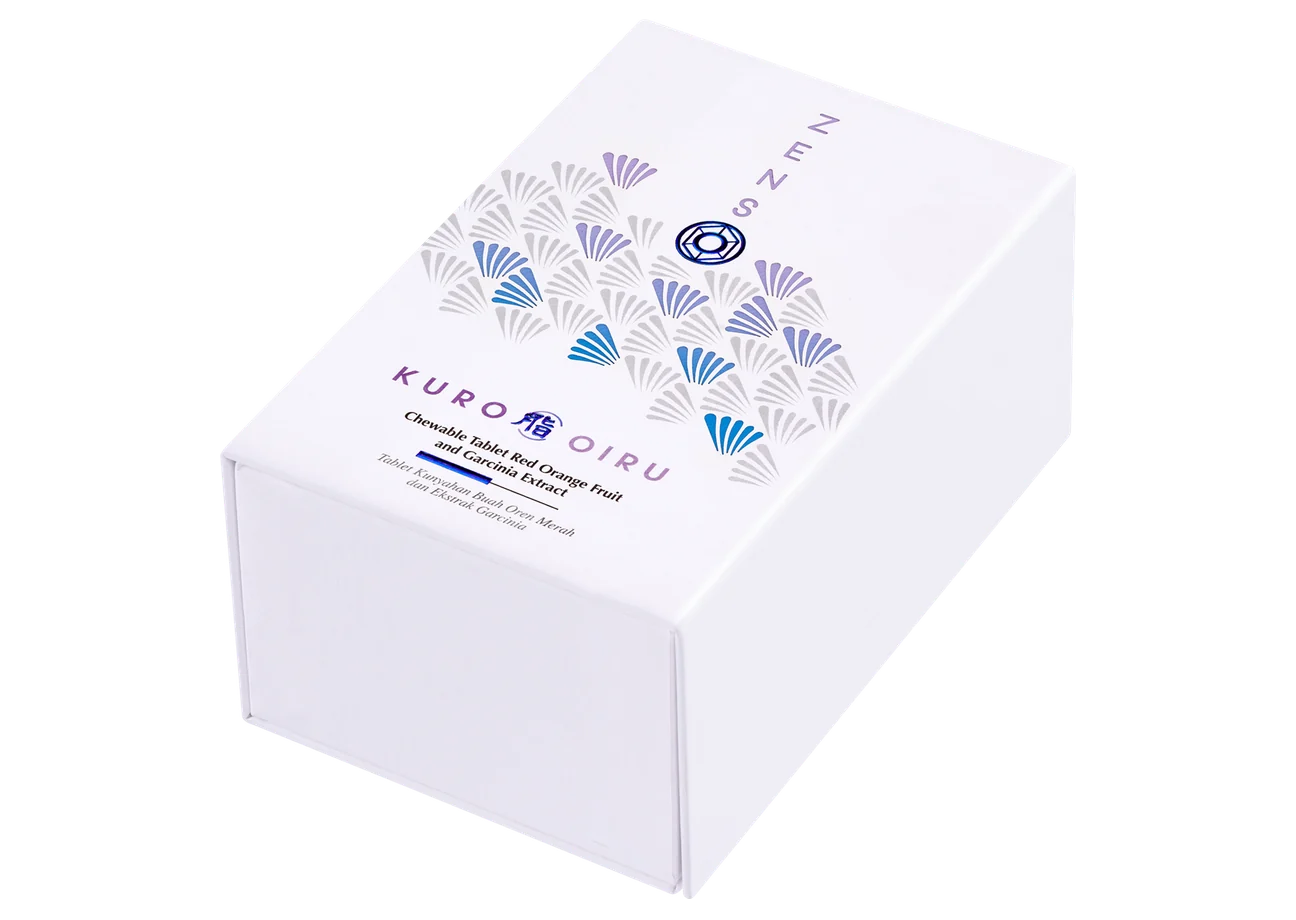
Supplements usually rely on a fibre such as chitosan, which binds some dietary fat in the gut, while the prescription medicine type blocks the enzyme that digests fat and is only used under a doctor’s care. Either way the effect is modest, it applies only to the meal it is taken with, and the common side effects are digestive. Chitosan is made from crustacean shells, so it is not for anyone allergic to shellfish. In Singapore we sell ZENSO Kuro Oiru, a rose-milk chewable taken before lunch and dinner: see Kuro Oiru on our Singapore store.
Fat blockers are sold everywhere in Singapore, from pharmacy shelves to marketplace listings. Here is what the category is, how the ingredients work and what side effects to expect.
See also: ZENSO review Singapore: how the sets compare.
What is a fat blocker?
“Fat blocker” covers two different things. The first is a prescription medicine that stops lipase, the enzyme that breaks down dietary fat, so part of the fat in a meal passes through undigested. That is a medicine your doctor decides on and monitors; we do not sell medicines.
The second is a fat-blocker supplement: tablets or chewables, usually built around a fibre that binds some fat, often with other ingredients aimed at how the body uses and stores fat. These are foods, not medicines, and they are the subject of the rest of this guide.
How do fat blockers work?
The best-known binder is chitosan, a fibre made from the shells of crustaceans such as shrimp and crab. In the gut it can attach to some of the fat from a meal, so less of that fat is taken in. It only works on food eaten at about the same time, so fat blockers are taken shortly before meals.
Most modern formulas add ingredients that act on what happens after you eat rather than on absorption:
- L-carnitine helps carry fat into cells to be used for energy.
- Morosil® is a branded extract of Moro red orange, a Sicilian blood orange.
- IGOB131® is a branded extract of African mango (Irvingia gabonensis) seed.
- Garcinia and tea extracts are common in weight-management blends.
Kuro Oiru takes this two-part approach. Our page explains that chitosan binds fat from the meal you are about to eat, while L-carnitine, Morosil® red orange and IGOB131® African mango help your body burn fat and store less of it, with garcinia and purple tea to support fat metabolism. Each tablet also carries Kurozu black vinegar, fermented 1,000 days.
Do fat blockers work?
They can help, within limits. A fat blocker reduces some of the fat absorbed from a meal; it does not cancel a heavy meal, and research on the common supplement ingredients is mixed, with modest effects where they are reported. They work best as one habit alongside balanced meals and activity. Be sceptical of any listing that promises a fixed number of kilos in a fixed number of days.
Our Kuro Oiru page notes that Morosil® red orange extract has been studied in adults at 400 mg a day for body weight and waistline, alongside a balanced diet and daily walking, which is the amount in two tablets; it says plainly that this is a study of the ingredient, not of Kuro Oiru. The page also says results vary from person to person and are best with a balanced diet and exercise.
Fat blocker pills side effects
The side effects of fat blockers are mostly digestive. Fibre binders such as chitosan can cause wind, bloating or constipation in some people, especially at first. Prescription lipase inhibitors are known for oily, loose stools. Because binders work on fat, they may also reduce absorption of fat-soluble vitamins and some medicines taken at the same time, so ask your doctor or pharmacist about timing if you take regular medication.
For Kuro Oiru, our page asks you to check with your doctor first if you are pregnant, breastfeeding or on medication.
Shellfish allergy and chitosan
This is the most important safety point in the category. Chitosan is usually made from crustacean shells, so check every fat blocker’s label before you take it if you have a shellfish allergy. For Kuro Oiru our page is direct: it contains chitosan made from crustacean shells, so it is not for anyone allergic to shellfish.
Carb and fat blocker pills: should you take both?
A fat blocker does nothing for the starch in rice and noodles or the sugar in drinks; that is the job of a carb blocker. Some people take one of each before meals. In the ZENSO routine, our page says Kuro Oiru and Kuro Shuga are chewed before lunch and dinner, Oiru for the fat and Shuga for the carbs and sugar.
Kuro Oiru review: how is it taken?
You chew one tablet 30 minutes before lunch and one 30 minutes before dinner; it tastes of rose milk, so no water is needed. One box holds a jar of 60 tablets, which lasts 30 days at two a day, and a tablet has 4 kcal and no fat. Our page says SGS screened Kuro Oiru for 365 drugs and found none, and it is certified halal by JAKIM. Our price is S$130 a box, and delivery is free. It is a daily before-meals habit, not a quick fix.