As a supplement it is taken as an antioxidant, most often for tired, strained eyes and for skin, and eye formulas usually pair it with lutein and zeaxanthin because it does a different job from them. The research is promising but still growing, so see it as daily support, not a remedy. If eye comfort is your reason, E-VITE combines 4 mg astaxanthin with 10 mg lutein and 2.2 mg zeaxanthin in 2 chewables a day.
Astaxanthin turns up on eye supplements, skin creams and even weight-loss listings. This guide explains what it is, what it is reasonably used for, how it compares with lutein and who should check with a doctor first; we sell one eye product that contains it, covered at the end.
What is astaxanthin and where does it come from?
Astaxanthin belongs to the xanthophylls, the same branch of the carotenoid family as lutein and zeaxanthin. Microalgae make it to shield themselves from strong sunlight. Tiny crustaceans eat the algae, and fish such as wild salmon eat the crustaceans, which is where their colour comes from. Most supplement astaxanthin is extracted from farmed Haematococcus algae, while a synthetic form is widely used in fish feed. Unlike beta-carotene, astaxanthin is not turned into vitamin A in the body.
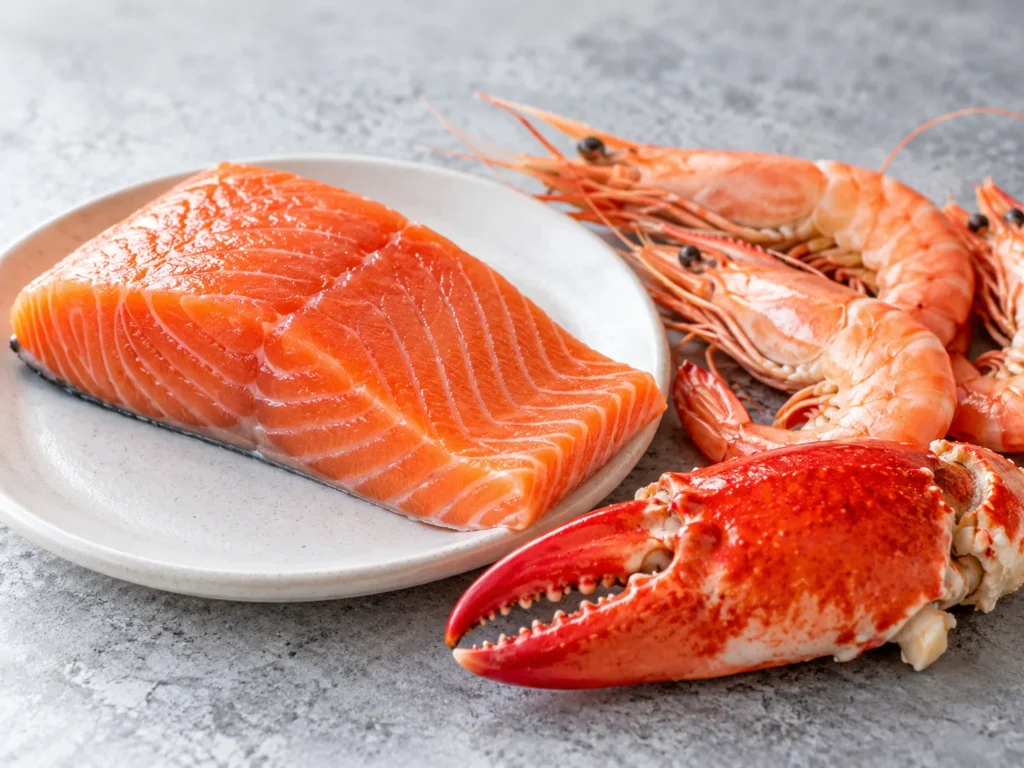
Salmon, trout, prawns and crab give you some, but the amount varies a lot with the source and how the food was farmed, which is one reason people choose a supplement with a stated dose.
What is astaxanthin good for?
Astaxanthin is best known as an antioxidant. Its long molecule can span a cell membrane, which is why researchers have looked at it for tissues exposed to light and oxygen, such as the eyes and skin. The most common reasons people take it:
- Eye comfort: tired, dry or strained eyes after long hours on screens. This is the use most eye formulas build on.
- Skin: capsules and creams are sold for moisture and a healthy look; study results are modest and vary from person to person.
- Exercise and recovery: studied, with mixed findings so far.
- Weight loss: there is no good reason to buy astaxanthin for this. It is not a fat burner, and a listing that sells it as one is overselling.
Astaxanthin vs lutein for the eyes
They are cousins, not substitutes. Lutein and zeaxanthin collect in the macula, the centre of the retina, and form the macular pigment that filters blue light; our E-VITE page describes them as building the eye’s internal sunglasses. Astaxanthin does not build that pigment. In an eye formula it is there as an antioxidant for comfort, and our page puts it this way: astaxanthin soothes tired, dry, strained eyes.
So for long-term eye support, lutein with zeaxanthin is the base, and astaxanthin is an addition for eye strain.
Taking lutein, zeaxanthin and astaxanthin together
Combining them is common and sensible: each does a different job, and all three are fat-soluble carotenoids that are absorbed best with a meal. Check that the label lists each one in milligrams per daily serving, so you know exactly what you get. For lutein, the figure most labels aim at is the one our page quotes: the American Optometric Association recommends 10 mg of lutein and 2 mg of zeaxanthin a day. Astaxanthin has no recommended daily intake, so follow the label rather than stacking several products that each contain it.
Is astaxanthin safe? The kidneys, and who should ask a doctor first
At label doses astaxanthin has been generally well tolerated in studies so far, but long-term data are still limited. People also ask whether astaxanthin is good for the kidneys. The straight answer: it is not a kidney medicine, and no supplement should be relied on for your kidneys. If you have a kidney condition, see your doctor before taking any supplement.
Ask a doctor or pharmacist first if you:
- are pregnant, breastfeeding or planning a pregnancy;
- take any prescription medicine, especially long term;
- have a seafood or algae allergy (check the source on the label);
- are thinking of giving it to a child.
For E-VITE, our page says: pregnant, breastfeeding or on medication? Ask your doctor first. Stop if any reaction occurs, and keep the bottle out of children’s reach.
Capsules, powder, cream or chewable?
Softgel capsules are the most common form, with astaxanthin dissolved in oil. Powder is mostly used by food and drink makers, and dosing it accurately at home is hard. Creams and serums put astaxanthin on the skin; they are cosmetics and do nothing for your eyes. Chewables combine it with other eye nutrients and need no water. Pick the form you will actually take every day.
Where E-VITE fits
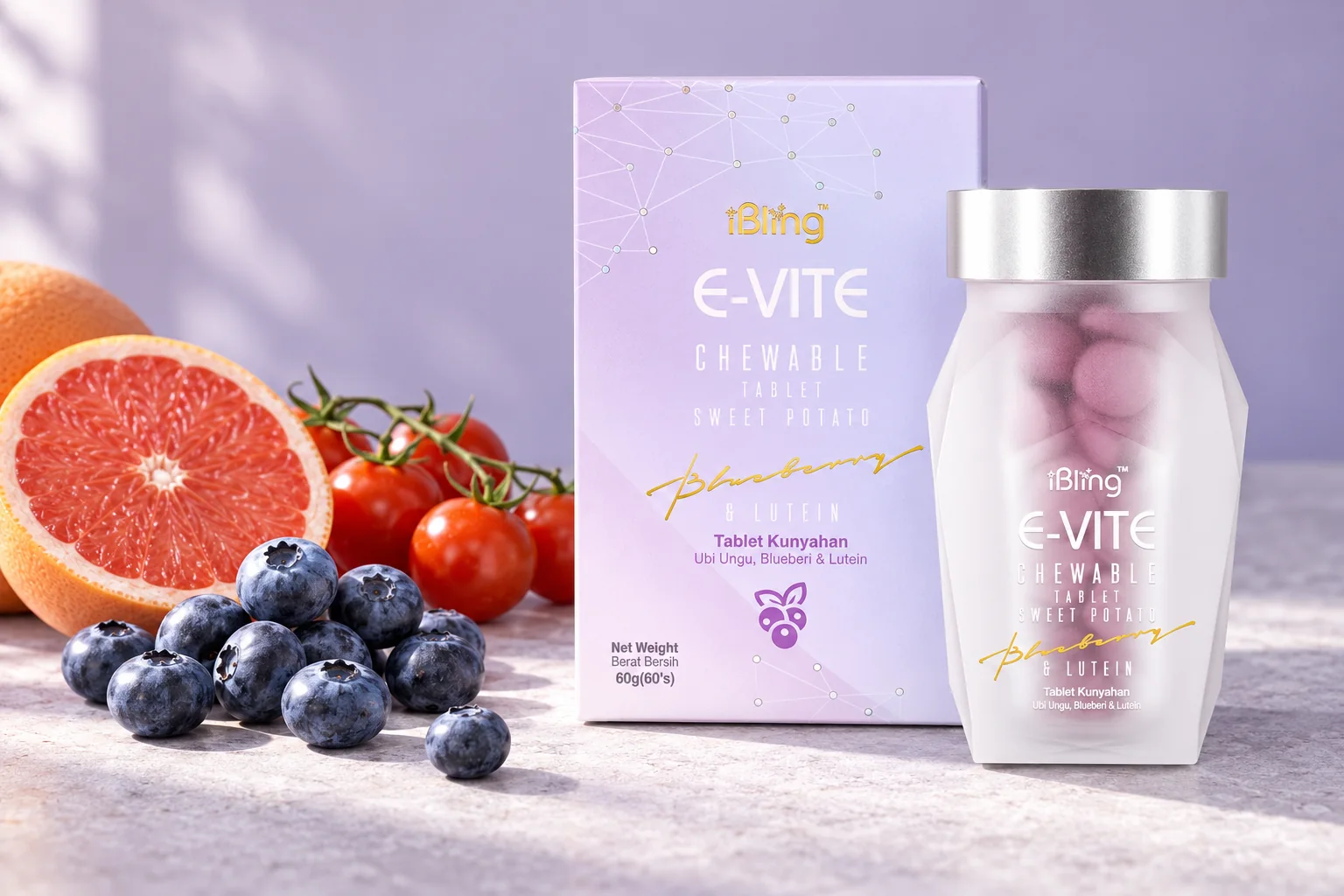
E-VITE is an eye chewable, not a skin product. Every 2 chewables give 10 mg XanMax® lutein, 2.2 mg zeaxanthin and 4 mg astaxanthin to support clearer vision, soothe eye strain and help filter blue light, with blueberry, purple sweet potato, tomato and grapefruit. You chew 2 tablets a day after a meal, with no water needed, and one bottle of 60 lasts 30 days. It is certified halal by JAKIM and suitable for vegetarians. Our price is S$109 a bottle, with free express delivery anywhere in Singapore, usually 1-3 working days.