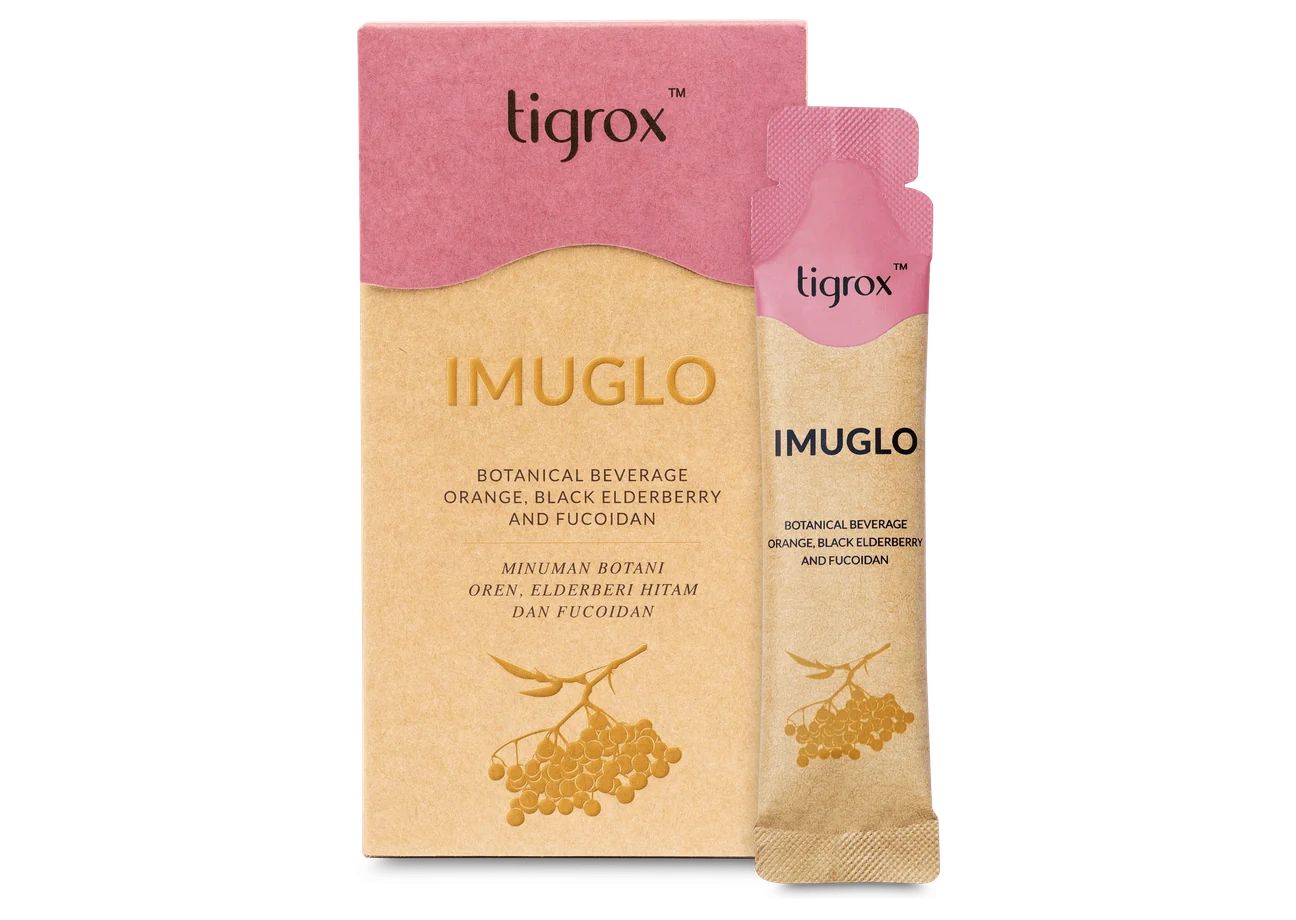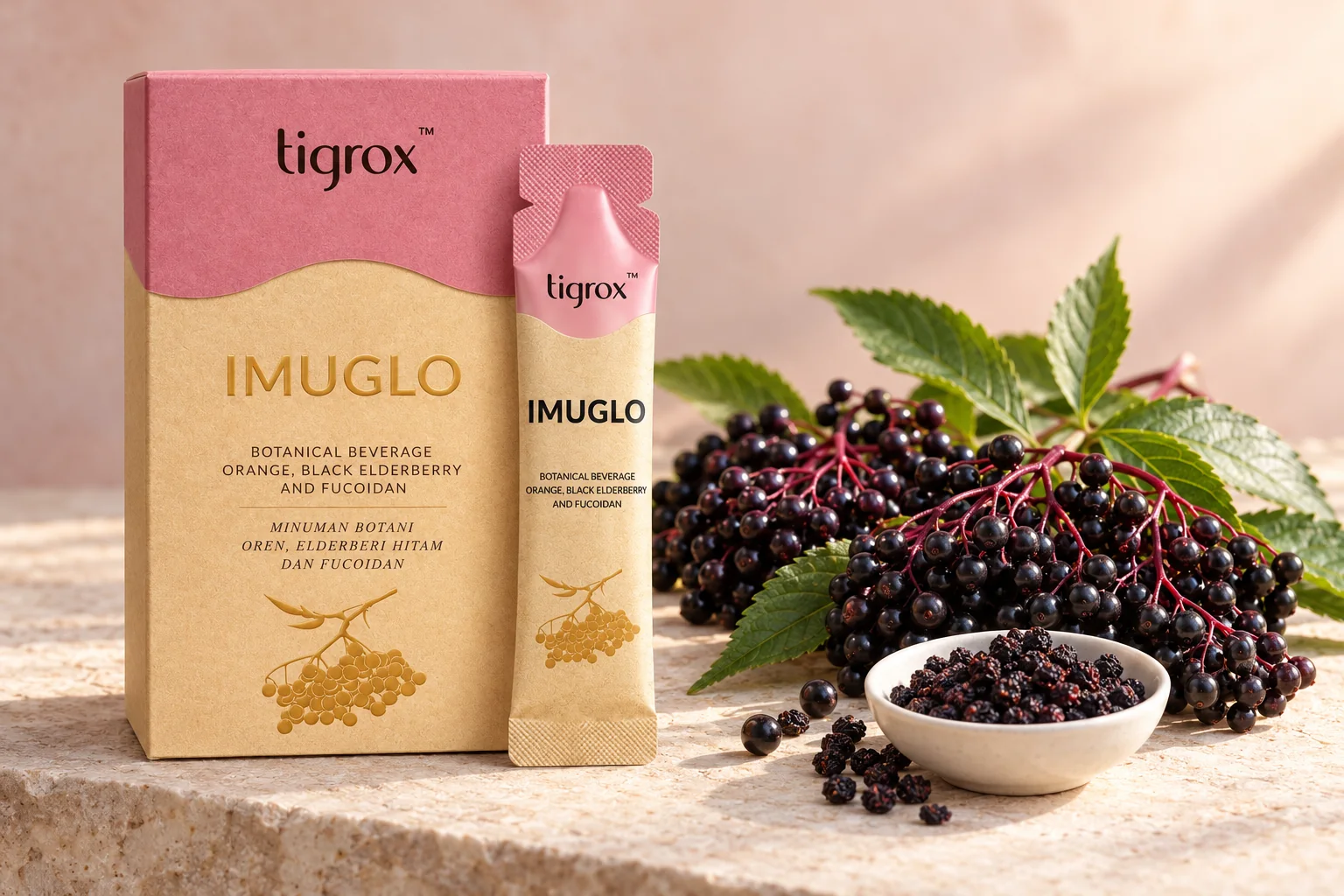
Properly prepared elderberry is generally well tolerated, but never eat the berries raw, and ask your doctor first if you are pregnant, breastfeeding, taking medicine or have an autoimmune condition. In Singapore, our TIGROX IMUGLO elderberry drink gives you 300 mg of ElderCraft® European black elderberry in every sachet, with maitake, fucoidan and vitamin C.
This guide covers what elderberry is, what it can and cannot do, how to take it, and safety in pregnancy, children and the liver. We sell an elderberry drink, so product facts are quoted from our own page.
See also: KidAOne Elderberry + Colostrum on our Singapore store.
What is black elderberry (Sambucus nigra)?
Black elderberry is the fruit of the European elder, Sambucus nigra, a shrub native to Europe. “Black elder”, “European elderberry” and “European black elderberry” all name the same plant. Its small, dark berries get their colour from anthocyanins, the purple pigments also found in blueberries and black grapes, and these work as antioxidants.
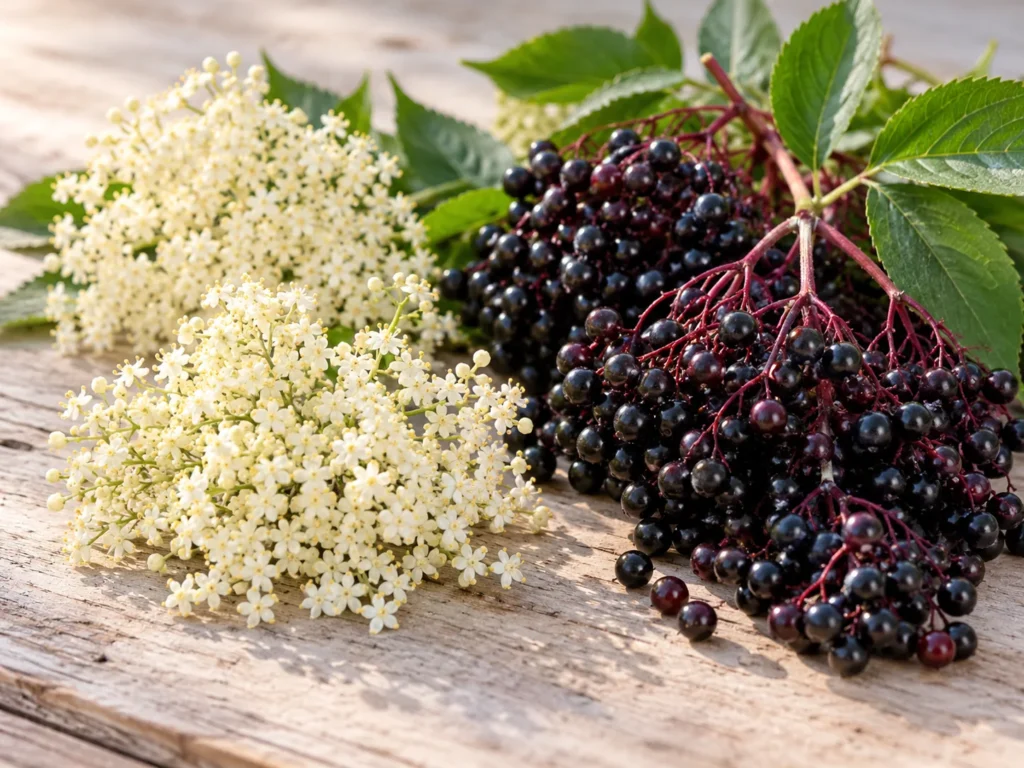
Elderberry vs elderflower: both come from the same shrub. Elderflower is the creamy spring blossom, used for cordials and light floral teas. Elderberry is the fruit, used for syrups, extracts, gummies and drinks. Most immune-support products, ours included, use the berry.
What are the benefits of black elderberry, and does it actually work?
Elderberry is a traditional European winter wellness food, and today people take it mainly to support the immune system. Most modern research has looked at elderberry around colds and flu. The studies are small and their results are mixed, so reviewers describe the evidence as promising but limited. Elderberry is a reasonable part of a daily routine, alongside sleep, good food and exercise, but no supplement makes you immune to infections, and it is not a substitute for vaccination or for seeing a doctor when you are ill.
Extracts differ a lot in strength, so look for one that states how much elderberry it holds and what it is standardised to. On our IMUGLO page, the ElderCraft® extract is “standardised to 14% anthocyanidins”, which the page describes as five times the anthocyanidins of blueberries, and the page says elderberry polyphenols support your immune defence and comfortable airways.
Why raw elderberries must be cooked or extracted
Do not eat elderberries raw or make remedies from a garden shrub. Raw or unripe berries, and the seeds, leaves, bark and stems, contain natural compounds that can cause nausea, vomiting and diarrhoea. Cooking and commercial extraction deal with this.
How to take elderberry, and how much per day
Elderberry comes as syrups, gummies, capsules, teas and drinks. What to check:
- Gummies: often sweetened, and some use gelatine, which matters if you need halal.
- Teas: often blend elderflower and are milder than a measured extract.
- Syrups: some are made with honey, which is not suitable for babies under one year old.
No single daily amount fits every product, because extracts differ in strength, so follow the label of the product you buy. For IMUGLO, our page says one 20 ml sachet a day, after a meal: tear it open and drink it straight from the sachet, with no water and no mixing. Each sachet holds 300 mg of ElderCraft® European black elderberry extract.
Elderberry side effects: who should check with a doctor first
Properly prepared elderberry is generally well tolerated. Some people get an upset stomach, and an allergic reaction is possible: stop and get medical advice if you notice a rash, swelling or difficulty breathing. Check with a doctor or pharmacist first if any of these apply:
- Pregnancy and breastfeeding: there is not enough safety research on elderberry supplements in pregnancy or while breastfeeding, so ask your doctor before taking any. Our IMUGLO page says the same: ask your doctor first if you are pregnant, breastfeeding or taking any medicine.
- Autoimmune conditions or immune-suppressing medicine: elderberry is taken to support immune activity, so anyone with an autoimmune condition or on immune-suppressing medicine (for example after a transplant) should ask their specialist first.
- Other regular medicines: ask your pharmacist about interactions.
- The liver: elderberry is not commonly listed as a liver risk, but long-term safety data are limited; if you have a liver condition, check with your doctor first.
Elderberry and allergies: elderberry is not an allergy medicine or an antihistamine. If sneezing or itchy eyes keep coming back, see a doctor or pharmacist, and if you react to elder pollen or the plant, avoid it.
Is elderberry safe for children, and from what age?
Follow the age directions on the product you buy. Never give children raw berries, and avoid honey-based syrups for babies under one. Our IMUGLO page says children can drink it from age 2, one sachet a day after a meal, the same as adults, and asks you to keep the box out of reach of young children. If your child is unwell, see a doctor.
Is elderberry halal?
The berry itself is a plant, so what decides halal status is the finished product: gelatine in gummies or capsules, and alcohol in some tinctures and syrups. Look for a recognised halal certificate on the product you buy. TIGROX IMUGLO is named on a JAKIM Halal certificate (MS 1500:2019), and Halvec Laboratories, a JAKIM panel laboratory, found no porcine DNA in it.