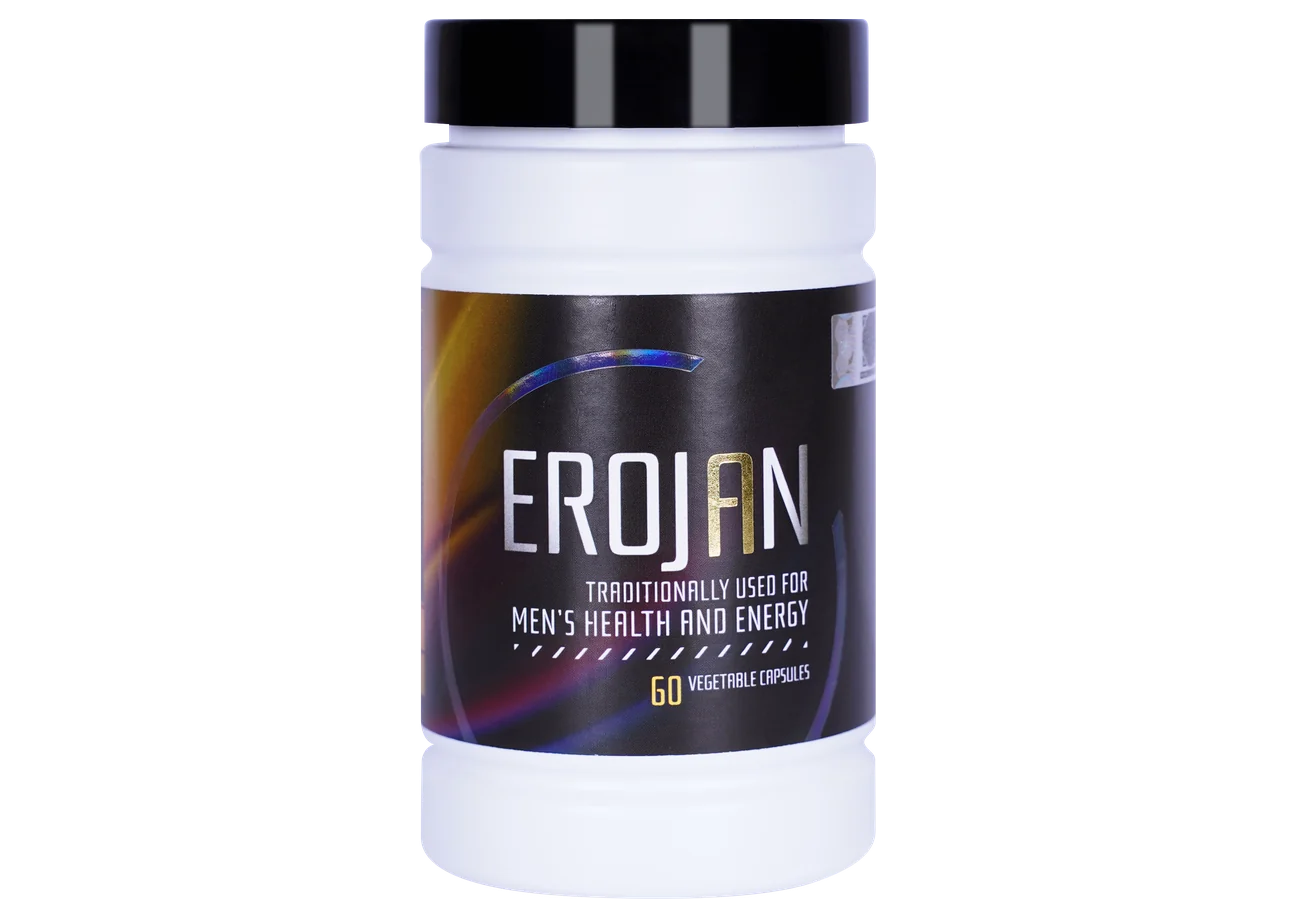
Men and women mainly take it for everyday energy and stamina; the research is small and mixed, so think of it as a food-based supplement, not a medicine. It is usually well accepted as a food, but if you have a thyroid condition, are pregnant or breastfeeding, or take medication, ask your doctor first. If you want maca in a men’s daily blend, it is one of six botanicals in EROJAN Men’s Energy Capsules, which we sell in Singapore.
We sell a men’s supplement that contains maca, so this guide is written to be useful first. Where we talk about our own product, we only use what our Singapore product page states.
What is maca?
Maca is a small plant of the cabbage family (Brassicaceae) that grows close to the ground in the central Andes of Peru, at altitudes where few other crops survive. The part people eat is the swollen root, which looks a little like a round radish or turnip. Andean communities have long dried it and cooked it into porridges and drinks.
The maca plant comes in several root colours, mainly yellow or cream, red and black. They are the same species; you will see them sold as “red maca” or “black maca”. Once dried and ground, the roots become the maca powder most people know, with an earthy, malty taste.
What are the benefits of maca for men?
The traditional use is simple: maca was food for hard work at altitude, valued for energy and stamina. Modern research has looked at energy, mood, sense of well-being and exercise in small groups of adults. Some studies report positive results and others find little difference, and most are small and short. The honest summary is that maca may help some people feel more energetic, but it is not a stimulant, it does not replace sleep, and it will not undo long hours and stress on its own.
Be wary of men’s products that promise dramatic or instant results.
Where maca fits in our range: the EROJAN page describes maca as “the Andean root that helps boost energy and sports performance and supports muscle strength”, and says maca and Epimedium “help you keep your pace, from the first meeting to the last set.” In EROJAN, maca is not taken alone: two vegetable capsules a day bring six botanicals together, led by Tongkat Ali.
Is maca good for women too?
Yes, maca is a food, and women eat it in smoothies, oats and baking just as men do. Small studies have looked at mood and general well-being in women, including around menopause, but the evidence is limited. If you have a hormone-sensitive condition, are pregnant, trying to conceive or breastfeeding, ask your doctor before taking concentrated maca supplements. Note that EROJAN is made for adult men, so women looking for maca should choose a plain maca food product instead.
Maca tablets vs powder (and maca drinks)
- Raw powder: dried, ground root. Cheapest per serving, but some people find it hard on the stomach.
- Gelatinised powder: cooked to remove most of the starch, closer to how maca is traditionally eaten, and usually gentler to digest.
- Tablets and capsules: a fixed amount with no taste, easy to carry. Check whether they hold plain powder or a concentrated extract.
- Maca drinks: lattes and ready mixes are convenient; check the sugar and how much maca each serving holds.
- Blends: maca combined with other herbs. Check every ingredient, not just the one on the front.
Whatever form you choose in Singapore, look for the Latin name Lepidium meyenii, the amount per serving, raw or gelatinised, the other ingredients and any lab testing, and buy from a seller you can trace.
How much maca per day?
There is no single official daily dose for maca as a supplement. A scoop of powder and a capsule of concentrated extract are not comparable, so follow the serving on the pack you buy rather than a number from a forum. Start at the low end, take it with food and see how your stomach feels.
EROJAN has its own fixed directions: two capsules once a day, after a meal, with water, every day, and no more than 2 capsules a day. One bottle of 60 capsules lasts 30 days.
Maca powder side effects: who should check with a doctor first?
Maca is generally eaten as a food, and most people take it without trouble. Possible issues to know about:
- Stomach upset or bloating, more often with raw powder. Gelatinised powder or a smaller serving can help.
- Thyroid: like other cabbage-family plants, maca contains glucosinolates. If you have a thyroid condition, ask your doctor first.
- Pregnancy and breastfeeding: there is not enough safety information, so ask your doctor.
- Medication or a medical condition: ask your doctor or pharmacist first.
For EROJAN specifically, our page says it is for adult men, and that if you take medication or have a medical condition, such as a heart or blood pressure condition, you should ask your doctor before you start. Keep it out of reach of children. If anything you take makes you feel unwell, stop and see a doctor.