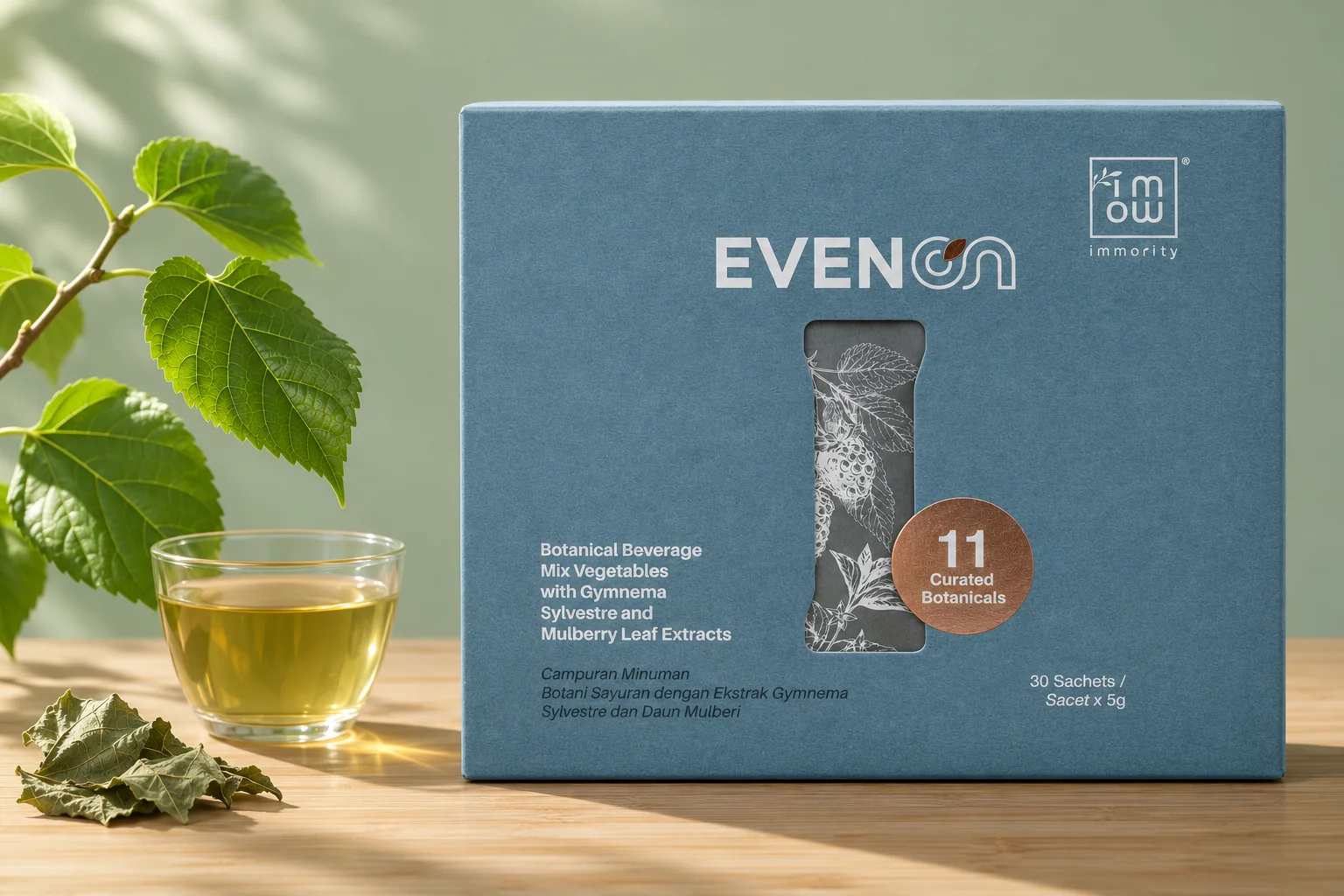
In a human study, the peak after a 50 g sugar drink was 59% lower than control (Thaipitakwong et al., 2020), and a 5% DNJ mulberry leaf extract is one of the two leads in Immority EvenOn.
Mulberry leaf (桑叶) has been used for thousands of years in Chinese tradition as both food and medicine, and in Singapore you are most likely to meet it as a tea at a medical hall or on a supermarket shelf. It matters because of what happens after lunch: the heavy, sleepy feeling after a plate of chicken rice, or an after-meal reading that runs high. This guide explains what mulberry leaf does to that rise, what the studies found, and whether tea or a standardised extract makes more sense.
Immority EvenOn is a blood sugar balance drink from Immority. One 5 g sachet a day, stirred into water with your main meal, gives you 11 botanicals led by gymnema (25% gymnemic acid) and mulberry leaf (5% DNJ). It is halal (JAKIM) and classified as a food product by Malaysia’s NPRA, where it is made.
See also: What is Immority EvenOn? The complete Singapore guide
How does mulberry leaf lower after-meal blood sugar?
It slows the digestion of the carbs themselves. The leaf’s active compound, 1-DNJ (1-deoxynojirimycin), blocks the gut enzymes that split starch and sugar into glucose, so the glucose from your meal reaches your blood more gradually and the after-meal peak is flattened.
Picture a plate of char kway teow or a generous scoop of white rice. Without help, the starch is broken down quickly and your sugar climbs steeply, then falls back, which is often when drowsiness and the urge for something sweet arrive. With DNJ in the mix, that curve rises lower and more slowly.
Mulberry leaf does more than slow absorption. It supports the body’s own GLP-1 response (GLP-1 is a gut hormone released after meals); its flavonoids are strong antioxidants that ease the oxidative stress of high sugar and help protect the insulin output of the beta cells; and its polyphenols and alkaloids raise insulin sensitivity, so cells take in glucose and turn it into energy.
What do the mulberry leaf studies show?
A human study of the after-meal peak and a large pooled analysis point the same way.
- After-meal peak: the blood sugar peak after a 50 g sugar drink was 59% lower than control, in a human study that compared several doses of mulberry leaf DNJ; Thaipitakwong et al., 2020
- Longer-term markers: fasting sugar, after-meal sugar and HbA1c all lower, in a meta-analysis of 23 human trials in people with type 2 diabetes or pre-diabetes; Kesharwani et al., 2026
Both are studies of mulberry leaf and its DNJ, not of EvenOn as a finished drink. Of the three markers, HbA1c moves slowest: red blood cells live about 120 days, so HbA1c reflects roughly the last 2 to 3 months of blood sugar, and any change is judged over months, not days.
Is mulberry leaf tea as good as an extract?
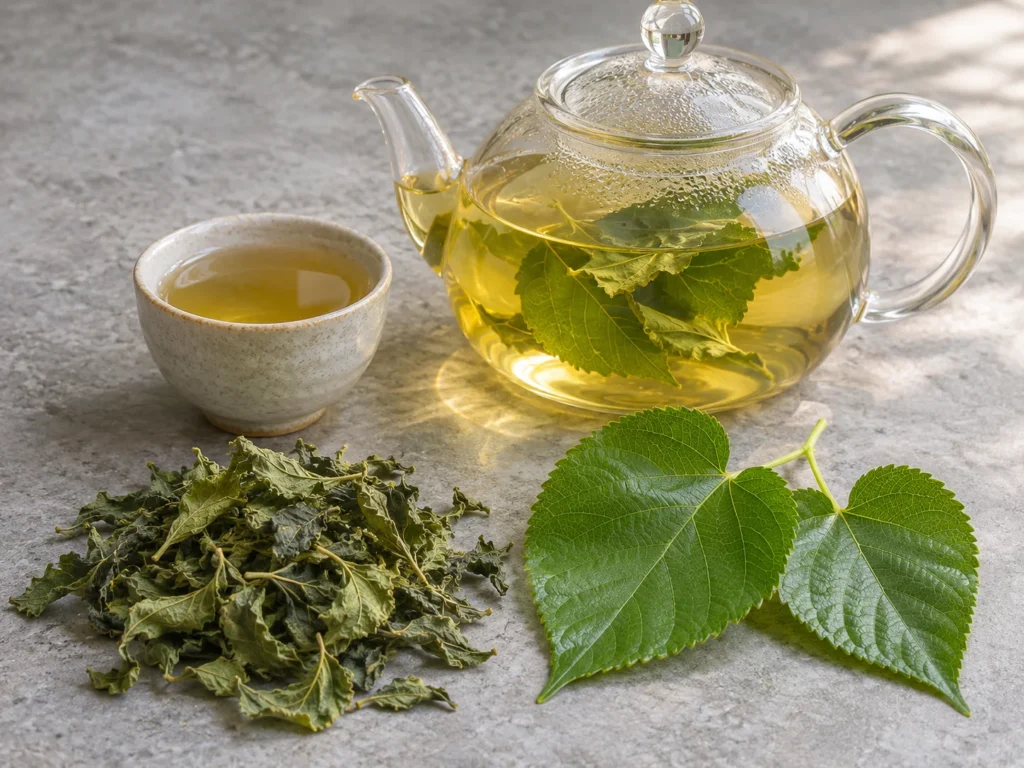
Tea is a pleasant drink with no sugar if you take it plain, but it is not a measured dose.
Mulberry leaf tea and a standardised mulberry leaf extract come from the same plant but are not the same thing. Unless the pack states a DNJ level, you cannot tell how much DNJ is in your cup, and it changes with the leaves, the amount and how long you steep them. The Thaipitakwong et al. (2020) study gave measured doses of DNJ and compared several of them with a control. EvenOn uses a mulberry leaf extract standardised to 5% DNJ, listed at 6.0% of the formula on the label. Timing matters as much as strength: DNJ works on the carbs you are digesting, so a cup sipped mid-afternoon on an empty stomach has little to work on. If you drink the tea, have it plain with your main meal; if you take EvenOn, take it with the day’s highest-carb meal, at the same meal every day.
How do you fit mulberry leaf into Singapore meals?
Pair it with your biggest carb meal of the day, then build that plate so it needs less help.
At the hawker centre that may be chicken rice, a bowl of noodles or nasi lemak; at home it may be a rice dinner. Take one EvenOn sachet in 100 to 150 ml of room-temperature water with that meal. Then shrink the job it has to do: Singapore’s ACE Clinical Guideline on pre-diabetes (Ministry of Health) suggests half the plate as vegetables with a small portion of fruit, a quarter lean protein and a quarter whole grains such as brown rice, with water instead of sugar-sweetened drinks. At the economy rice stall, two vegetables, one lean meat and less rice gets you close.
The 2-hour reading after a glucose drink is how Singapore picks up impaired glucose tolerance: 7.8 to 11.0 mmol/L in a 75 g oral glucose tolerance test, a range around 14% of Singaporeans fall into (ACE). See where your own numbers sit in our guide to pre-diabetes and normal blood sugar levels in Singapore.
In EvenOn, mulberry leaf also teams up with the other botanicals: with banaba it helps the liver release less sugar, steadying night-time and next-morning fasting sugar, and with banaba and the bitter melon peptide it raises insulin sensitivity. The full picture is in the 11 botanicals in EvenOn, one by one.
Is mulberry leaf safe, and who should check first?
Mulberry leaf extract is gentle and well tolerated, without serious stomach upset, and suits daily long-term use; the main thing to plan for is how it adds to diabetes medicine.
Because it lowers after-meal sugar, it adds to the effect of insulin and of tablets that push the pancreas to release insulin, such as gliclazide, and people on these are most at risk of a low. Know the signs: shaking, sweating, a fast heartbeat, hunger and confusion. HealthHub advises seeing your doctor if your sugar is recurrently below 4 mmol/L. Keep taking every medicine as prescribed, never stop or change a dose on your own, check your sugar more often in the first weeks because your readings may come down, and tell your doctor you take EvenOn.
Pregnant or breastfeeding? Ask your doctor first. With a known allergy, read the ingredients on the box first, and stop if you feel any discomfort.