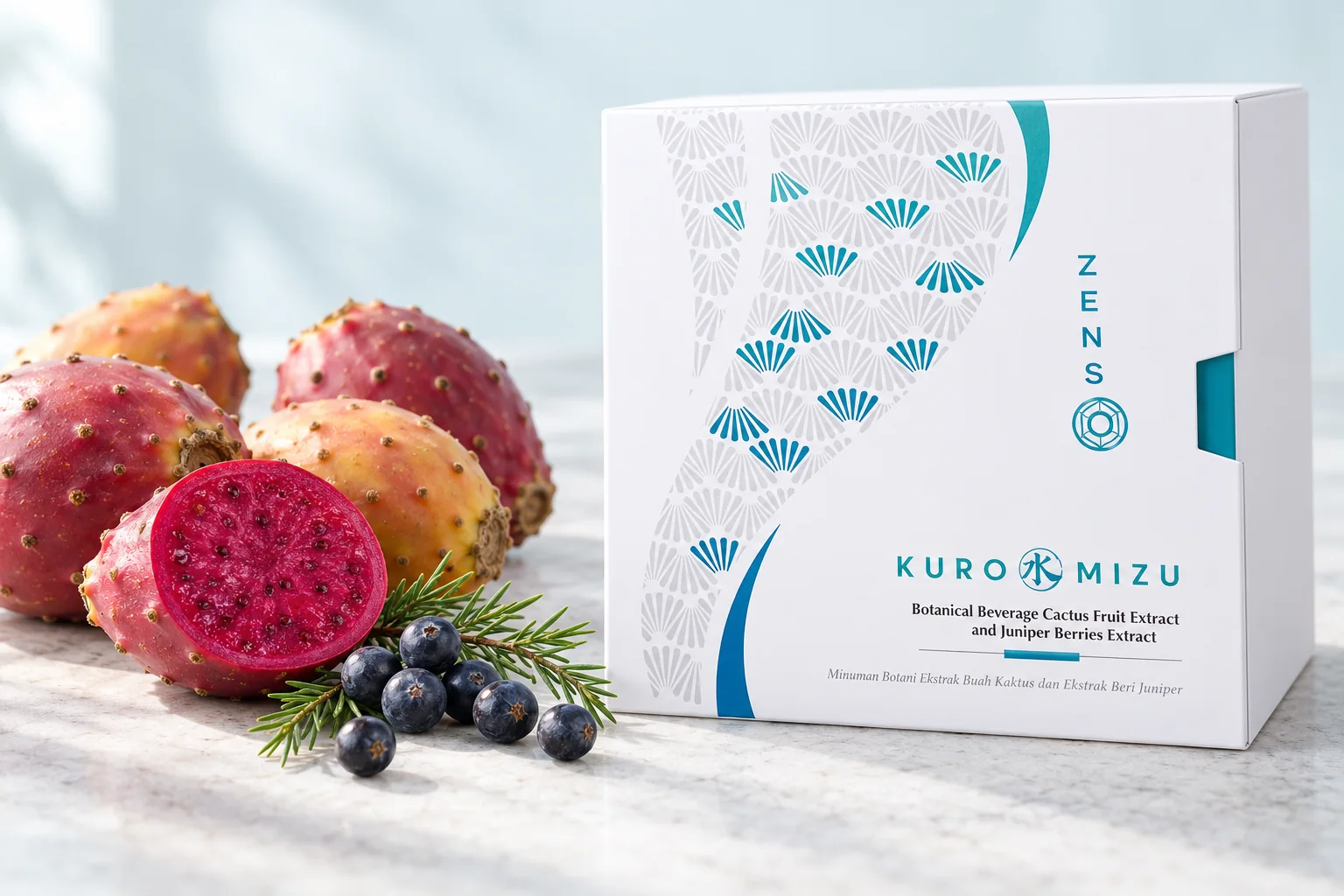
As a concentrated extract it plays a different role. In our ZENSO Kuro Mizu, CactiNea™ prickly pear extract from France is the star of a morning drink that helps your body flush out excess water and salt. A fruit is food and an extract is a supplement ingredient, so judge claims about each separately — see Kuro Mizu on our Singapore store.
Prickly pear turns up in imported fruit, juices and supplement labels. This guide covers the fruit first, then where the extract fits.
See also: Best supplement for bloating in Singapore.
What is prickly pear (cactus pear, barbary fig)?
Prickly pear is the fruit of the Opuntia cactus, most often the species Opuntia ficus-indica. Native to Mexico, it is now grown around the Mediterranean and North Africa, hence the many names: cactus pear, cactus fruit, barbary fig, Indian fig, and tuna in Spanish. Despite “ficus” and “fig” in its names, it is not a fig.
The plant has two edible parts. The flat green pads are called nopal (or nopales) and are cooked as a vegetable in Mexico. The fruits grow on the pad edges: egg-shaped, green to deep purple, with tiny spines on the skin and soft, seedy flesh that tastes of melon and berry.
What are the benefits of prickly pear fruit?
What the fruit offers is everyday nutrition:

- Hydration: the flesh is mostly water.
- Fibre: from the pulp and the many small seeds, which supports regular digestion as part of a fibre-rich diet.
- Vitamin C and minerals: it contributes vitamin C, and is known among fruits for its magnesium, alongside potassium and calcium.
- Antioxidant pigments: the red and purple colours come from betalains, the same pigment family that colours beetroot and red dragon fruit.
You will also read bigger claims online. Much of that research looks at concentrated extracts or the nopal pads, often in small studies, rather than at eating the fruit. Think of the fresh fruit as a nutritious food, not a remedy.
How do you eat prickly pear?
- Handle it with tongs or gloves. The skin carries tiny spines (glochids) that are hard to see and annoying to remove from your fingers.
- Rinse it under running water to knock off loose spines.
- Cut off both ends, make one shallow cut down the length of the skin, and peel the skin back in one piece.
- Eat the flesh chilled, sliced or cubed. The seeds are edible but hard; most people swallow them whole rather than chew them.
For juice, blend and strain. Choose fruit that gives slightly when pressed, with no mould or soft patches.
Prickly pear juice vs extract: what is the difference?
Juice is the fruit pressed or blended: mostly water, with the fruit’s natural sugars, some vitamins and pigments.
An extract is a concentrated ingredient made from a specific part of the plant and used in a measured amount. On a supplement label, check three things: which part is used (fruit, pad or flower), how much is in each serving, and where it comes from. A fruit extract and a pad extract are different ingredients.
What is prickly pear extract used for in supplements?
A common use is in water-balance formulas, and that is how our ZENSO Kuro Mizu uses it. The ingredient list on our page names CactiNea™ cactus fruit extract, 10% (prickly pear, from France), with juniper berries extract (3%), meadowsweet, ginger root, Japanese red plum, and 1,000-day fermented Kurozu black vinegar from Kagoshima. It comes as a plum-and-berry 10 ml sachet you drink when you wake, at 7 kcal a sachet.
What our page says it does, in its own words:
- A diuretic formula: helps flush out excess water.
- Helps clear the extra salt from salty meals; CactiNea™ helps your body let go of excess sodium.
- A less puffy face in the morning.
- Lighter legs after long hours sitting or standing.
Our page also cites a small study of the ingredient CactiNea™ at 2 g a day (15 women, 7 days), and states plainly that it is not a study of Kuro Mizu. Be clear on what this is: Kuro Mizu is about water and salt, not fat. Any change on the scale our page describes is the water weight going, and results vary from person to person. It works best with less salt, enough water and exercise. Kuro Mizu is certified halal by JAKIM.
Who should be careful with prickly pear?
- Fresh fruit: mind the spines, and start with one or two fruits; a lot of seeds at once can sit heavily in the stomach.
- Allergies: stop if you notice itching, swelling or a rash.
- Extracts and water-balance drinks: our Kuro Mizu page asks you to see your doctor first if you are pregnant, breastfeeding or on medication. Because it is a diuretic formula, you may visit the toilet more in the morning.
- Swelling: if swelling comes on suddenly, hurts or does not go away, see a doctor rather than rely on Kuro Mizu or any drink.