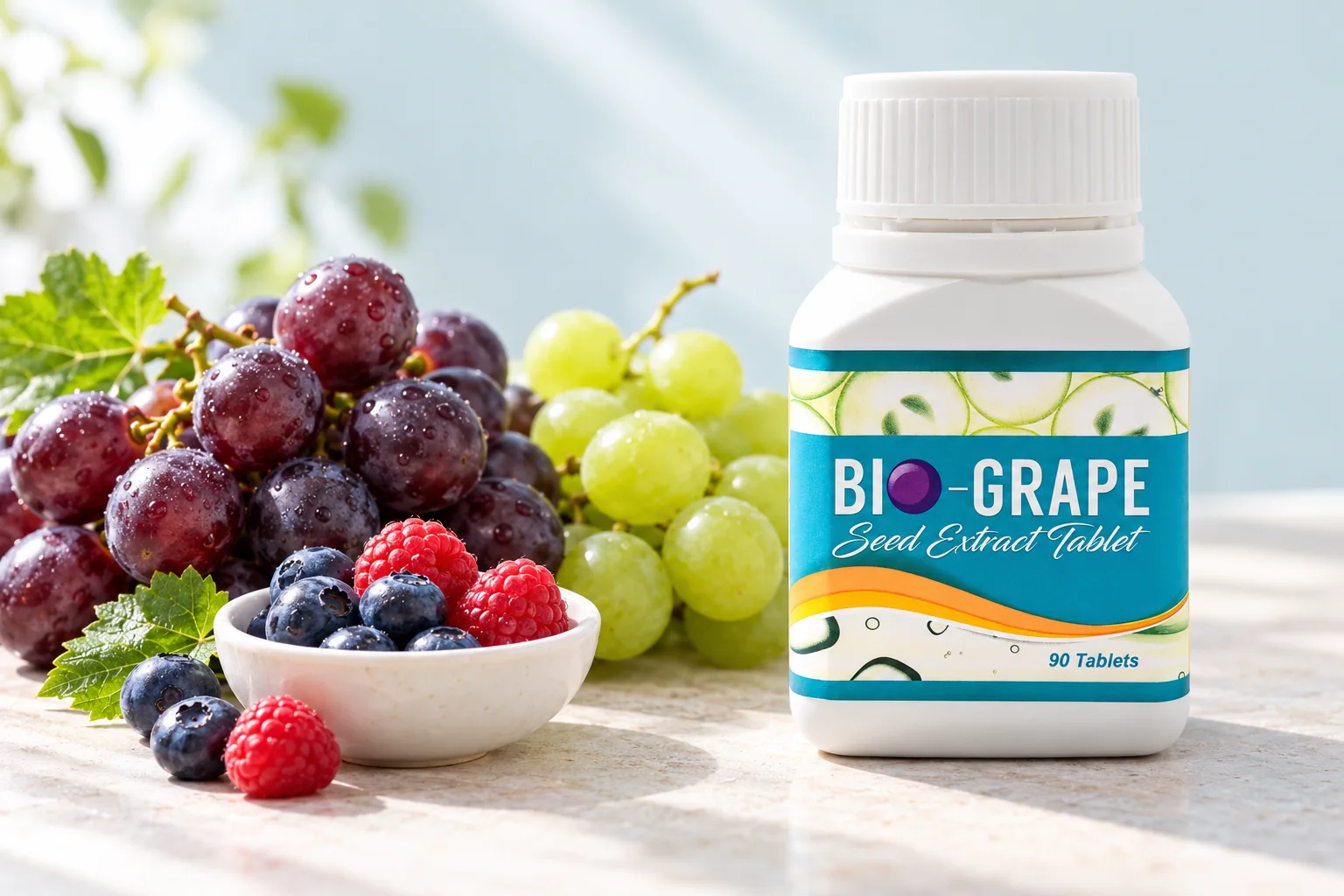
Eat a colourful diet first, then, if you want a supplement, pick one well-standardised antioxidant, take it at the label dose, and check with your doctor if you take medicine or are pregnant. For a simple daily option, our BIO Grape Seed tablets give 50 mg of grape seed extract standardised to 95% OPCs in each tablet.
“Antioxidant” is one of the most used words on supplement labels and one of the least explained. This guide covers what antioxidants do, what the research does and does not support, and how to choose. We sell antioxidant products, so anything about ours is quoted from our own product pages.
See also: TIGROX IMUGLO, our elderberry and vitamin C drink.
What are antioxidants and free radicals?
Free radicals are unstable molecules your body makes during normal metabolism, and in larger amounts after sun, pollution, smoking, alcohol and stress. In excess they damage cell parts, a process called oxidative stress. Antioxidants neutralise free radicals. Your body makes its own antioxidant enzymes and gets the rest from food: vitamins C and E, carotenoids, and the polyphenols in tea, berries, grapes and cocoa.
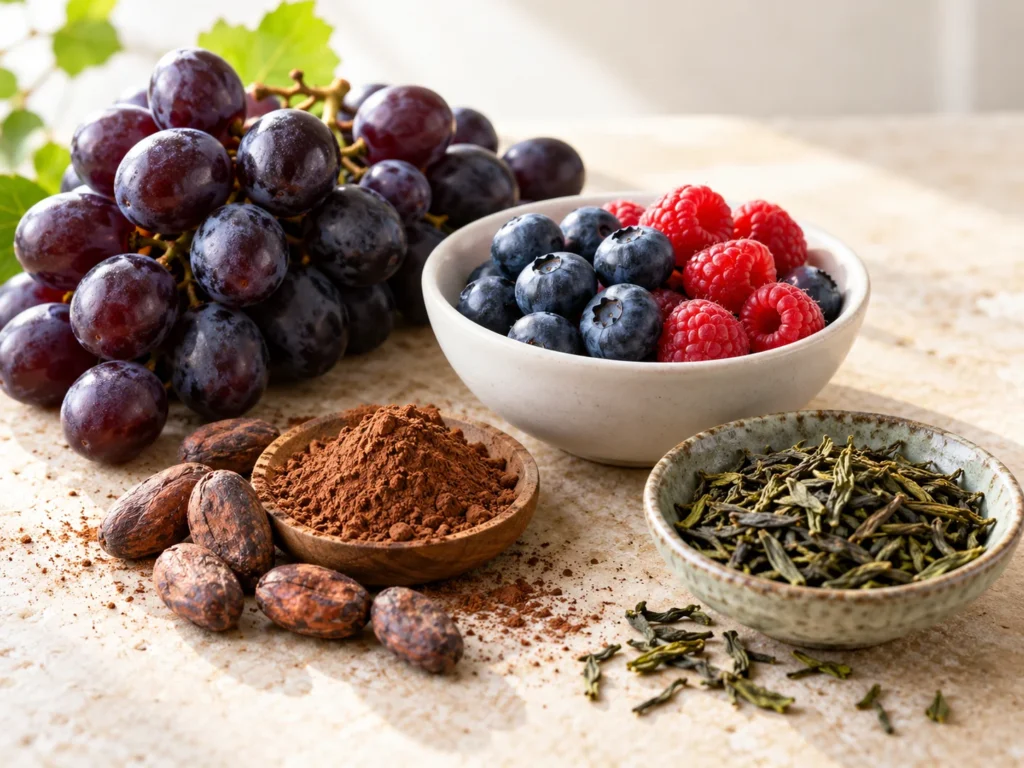
So the meaning of “antioxidant supplement” is simple: a concentrated, measured dose of one or more of these compounds in a tablet, capsule or drink.
Do antioxidant supplements work? Benefits and limits
Diets rich in fruit and vegetables are consistently linked with better health, but that does not mean the same compounds in pill form give the same result. Large trials of high-dose single antioxidants, such as beta-carotene and vitamin E, did not show the broad benefits people hoped for, and high-dose beta-carotene is generally advised against for smokers.
The fair conclusion: a supplement can help fill a gap in your diet, support a specific goal such as skin, and fit a healthy routine. It is not a shield against ageing or illness, and megadoses are a bad idea.
Food first: when does a supplement make sense?
Start with food: colourful fruit and vegetables every day, plus tea, nuts, beans and whole grains. A supplement can make sense when:
- you eat out most days and get few vegetables;
- you face a lot of sun, haze or traffic, long screen hours or short sleep;
- you have a specific goal, such as skin, and want a measured daily dose.
If you smoke, quitting does far more than any antioxidant tablet.
Common antioxidant supplements, and what to check
- Vitamin C: water-soluble, needed for normal immune function and collagen formation. Very high doses can upset the stomach.
- Vitamin E: fat-soluble. High doses may add to bleeding risk if you take blood thinners.
- Grape seed extract (OPCs): polyphenols from grape seeds. Look for a stated percentage of OPCs and mg per tablet.
- Astaxanthin: a red carotenoid from microalgae, often taken for skin. It is fat-soluble, so take it with food.
- Coenzyme Q10: made by your body, and often discussed by people on cholesterol-lowering medicine; ask your doctor first.
- Green tea extract: concentrated extracts have been linked with rare liver problems, so stay at the label dose and take it with food.
- Lutein and zeaxanthin: carotenoids found in the eye, often taken for eye health.
- Selenium and zinc: minerals your own antioxidant enzymes need. More is not better: too much selenium is harmful.
Antioxidant supplements for skin
Skin meets sun and pollution head-on, so sunscreen and good sleep do the heavy lifting. Oral antioxidants such as OPCs, astaxanthin and vitamin C are taken to support skin from within; the effects are gradual and modest, so give any product a fair trial and keep the sunscreen.
Our BIO Grape Seed page calls its OPCs an “oral cosmetic” that helps protect collagen, and keeps skin supple, moist and brighter. It describes the first bottle (days 1-30) as feeling fresher and less tired, with skin that looks less dull. Results vary from person to person.
Antioxidant supplements for men and for women
The basics are the same for everyone: food first, one well-chosen product, label dose. The differences come from life stage and goals. Women often choose an antioxidant for skin, and anyone pregnant or breastfeeding should ask their doctor before starting any supplement. Men who smoke should avoid high-dose beta-carotene, and men and women over 40 often think about circulation; if you have a heart condition or take regular medicine, talk to your doctor first.
Where BIO Grape Seed fits
BIO Grape Seed is a grape seed antioxidant tablet: 50 mg of French grape seed extract standardised to 95% OPCs in every tablet, which our page describes as a powerful antioxidant that scavenges free radicals and helps keep your skin glowing and your circulation healthy. It is for busy adults exposed to stress, screens, sun and late nights. You take one tablet after each meal, three times a day, with water.
If immune support is your main goal instead, TIGROX IMUGLO combines ElderCraft® black elderberry, standardised to 14% anthocyanidins, with PUREWAY-C™ vitamin C, which our page says works as an antioxidant and contributes to immune defence.