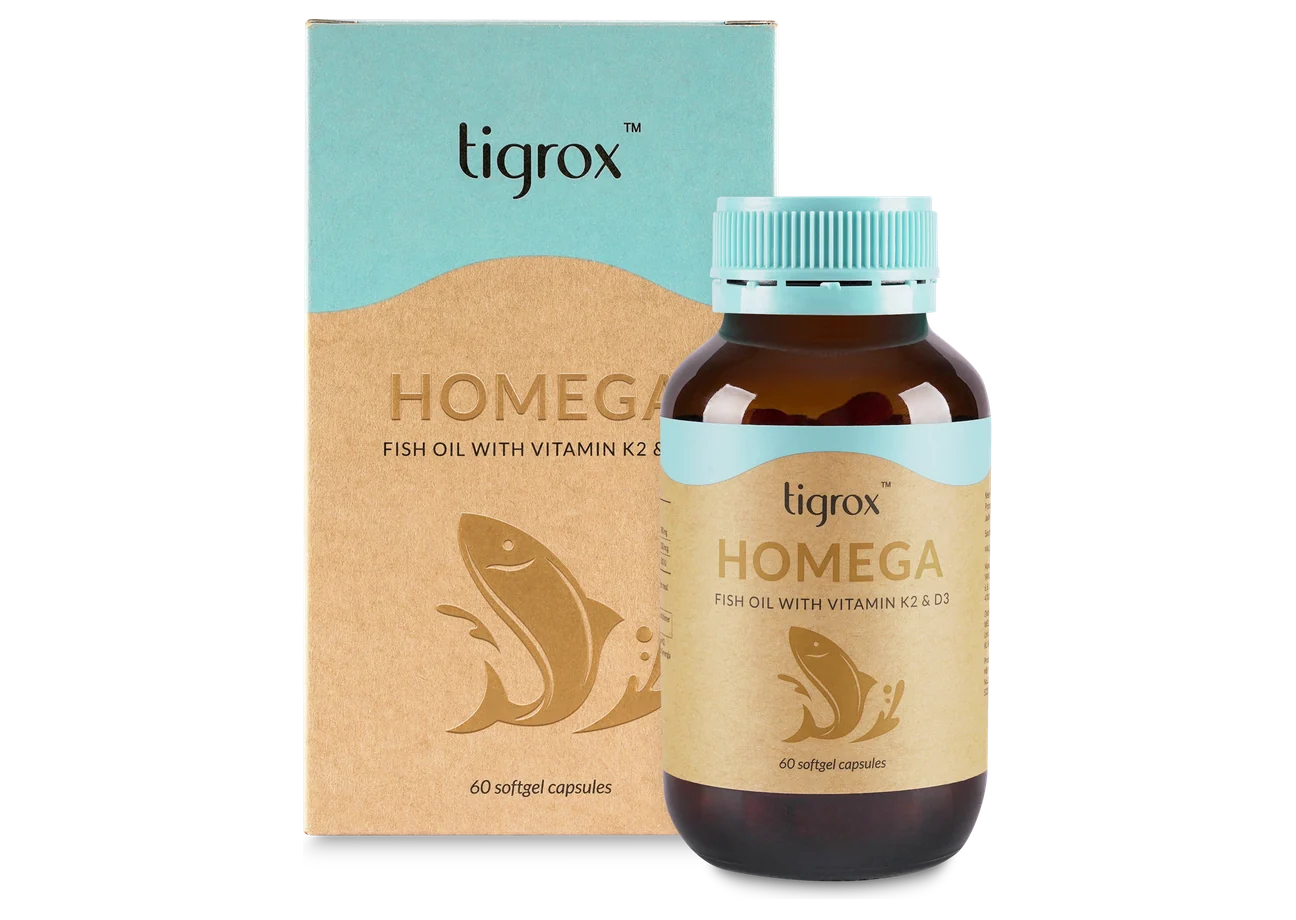
The bigger question is who should check first: anyone on blood thinners or due for surgery, anyone with a fish or seafood allergy, and anyone pregnant or breastfeeding. In pregnancy, DHA is often discussed positively, but whether you need a fish oil, and which one, is for your doctor to say. Even our own TIGROX HOMEGA fish oil asks you to consult a healthcare practitioner first if you take blood thinners, and to ask your doctor if you are pregnant, breastfeeding or taking any medicine.
At the label dose, fish oil is generally well tolerated by healthy adults, but “well tolerated” is not “right for everyone”. Here are the common side effects, how to reduce them, what to know in pregnancy and when to ask first. We sell TIGROX HOMEGA; where we mention it, we quote only its Singapore product page.
What are the common side effects of fish oil?
Most complaints are about the stomach and the taste, and they rise with the dose:
- a fishy aftertaste, fishy burps or bad breath;
- heartburn or indigestion;
- nausea, especially on an empty stomach;
- loose stools, bloating or wind.
These often settle when you take fish oil with a meal, switch to a fresher product or lower the dose. If they do not, stop and ask your pharmacist.
Fish oil side effects on skin
Skin problems are not expected. A rash, hives or itching after starting fish oil can point to an allergy, especially if you react to fish or shellfish: stop and see a doctor. Swelling of the face, lips or throat, or difficulty breathing, needs urgent help. At high intakes a few people notice a fishy smell on the breath or skin.
Are there fish oil side effects for men and for women?
There is no separate list; the effects above apply to everyone. What differs is your situation.
- Women: pregnancy and breastfeeding (below). If you already take a prenatal, calcium or vitamin D supplement, tally your total vitamin D when a fish oil has D3 added. HOMEGA does: 500 IU per softgel.
- Men: the usual questions are about heart and blood pressure medicines. Fish oil can add to the effect of blood thinners and may add to blood-pressure medicines, so take your medicine list to your doctor or pharmacist.
Is fish oil safe with blood thinners?
This is the interaction that matters most. Omega-3s can affect how blood clots, so combining fish oil with anticoagulant or antiplatelet medicines (for example warfarin, daily aspirin or clopidogrel) may raise the risk of bruising or bleeding in some people, particularly at higher doses. Before surgery or dental work, tell the team which supplements you take.
HOMEGA’s box is direct: it asks you to consult a healthcare practitioner first if you take anticoagulant or blood-thinner products. HOMEGA also contains vitamin K2, and vitamin K changes how warfarin works, which is one more reason to ask before you start.
Can I take fish oil while pregnant?
DHA matters in pregnancy because it is part of the developing brain and eyes, which is why many prenatal supplements include it and doctors often encourage fish that is low in mercury. Whether you also need a separate fish oil is a question for your doctor or gynaecologist. Worth raising:
- Overlap: does your prenatal already contain DHA and vitamin D?
- Purity: mercury is the main worry, so ask for published heavy-metal tests. SGS tested HOMEGA for mercury, arsenic, lead, cadmium, antimony and tin and found none.
- Fish liver oils: cod liver oil also carries vitamin A, which pregnant women are usually advised not to take in high amounts.
- Breastfeeding: the same approach; ask first.
We do not position HOMEGA as a pregnancy supplement; its page asks you to ask your doctor first if you are pregnant or breastfeeding. If your doctor approves a fish oil, bring the bottle: HOMEGA lists 780 mg of fish oil (312 mg EPA, 156 mg DHA), 100 mcg of vitamin K2 and 500 IU of vitamin D3 per softgel.
How do I avoid fishy burps?
- Take it with a meal. HOMEGA’s directions are one softgel after a meal, breakfast or dinner, whichever you never miss.
- Swallow it whole with water; do not chew or pierce it.
- Choose fresh oil. Oxidised oil tastes fishy. HOMEGA’s Omegavie™ oil is molecularly distilled and protected by QualitySilver™ antioxidants, so it does not oxidise or turn rancid (TOTOX below 26).
- Store it well: HOMEGA belongs in a dry place below 30°C, away from light and moisture. If a capsule smells sharply rancid or is past its expiry date, throw it away.
Who should ask a doctor before taking fish oil?
- Anyone on blood thinners, antiplatelet or blood-pressure medicines.
- Anyone with a bleeding disorder, or with surgery or dental work coming up.
- Anyone pregnant, breastfeeding or trying to conceive.
- Anyone with a fish or seafood allergy, or on regular medicine.
- Parents considering fish oil for children: use a children’s product and ask your paediatrician.
Vegetarians: most softgels are gelatin, and HOMEGA’s softgel is bovine, so it is not for vegetarians.