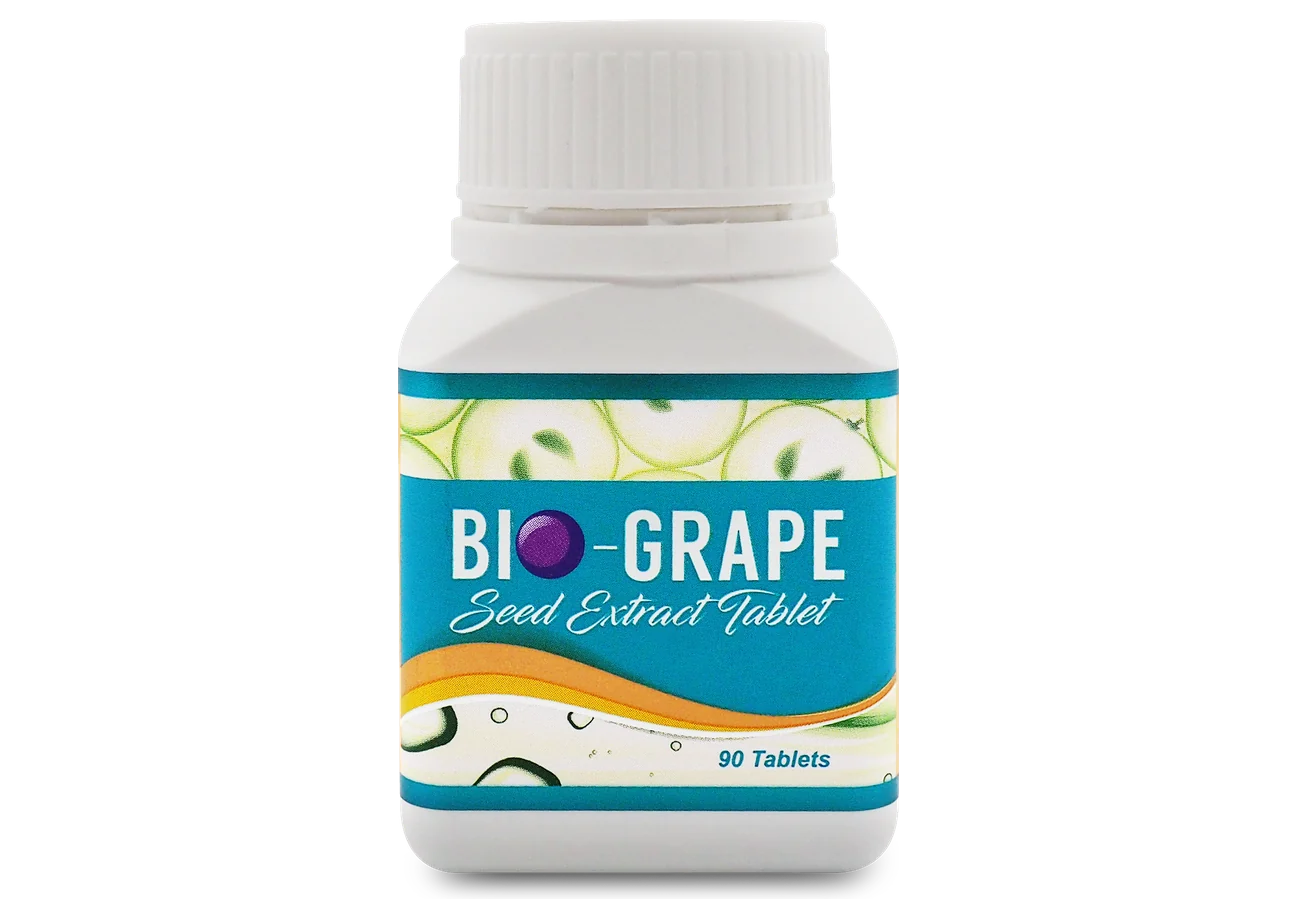
Side effects are usually mild, but ask your doctor first if you take blood-thinning medicine, are pregnant or breastfeeding, or have a medical condition. Our BIO Grape Seed tablets hold 50 mg of French grape seed extract standardised to 95% OPCs in each tablet, taken as one tablet after each meal.
This guide covers grape seed extract and OPCs, side effects, dosage and BIO Grape Seed, which we sell; product facts are quoted from our own page.
See also: our guide to collagen for skin in Singapore.
What is grape seed extract?
Grape seed extract comes from the seeds of wine grapes (Vitis vinifera), usually a by-product of winemaking, extracted to concentrate their polyphenols. It is not the same as grape seed oil, the cooking oil, which is pressed for its fat and is not a source of standardised OPCs.
What are OPCs, and why does “95%” matter?
OPCs, or proanthocyanidins, are the main antioxidant compounds in grape seeds. Our page puts it simply: they dissolve in both water and fat, so they work inside and outside the cell.
Standardisation tells you how much of the extract is the active compound. Two products can both say “grape seed extract” and deliver very different amounts of OPCs, so look for a stated percentage and the milligrams per tablet. BIO Grape Seed states 50 mg of grape seed extract per tablet, standardised to 95% OPCs, and our page says 120-130 grape seeds go into a single tablet.
Grape seed extract benefits: skin, circulation and women
Grape seed extract is taken mainly as an antioxidant, to help the body cope with the free radicals that sun, pollution, smoking and stress produce. Research has looked at circulation and skin, but many studies are small or use different extracts, so the evidence is still building. Does it work? It can support a healthy routine, but it will not undo late nights or sun damage on its own, and it is not a medicine.
Our product page describes what its 95% OPC tablets are for:
- Antioxidant: fights the free radicals that sun, haze, screens, smoke and late nights make, and helps protect your cells.
- Skin: called an “oral cosmetic” that helps protect collagen, and keeps skin supple, moist and brighter.
- Circulation: helps relax blood vessels, so blood and oxygen flow freely around your body.
For women: the most common reason women ask about grape seed extract is skin. Our page lists “women who want brighter, supple-looking skin” among the people who take it. Sunscreen and sleep still come first.
Grape seed extract side effects, allergies and who should check first
Grape seed extract is generally well tolerated. Reported side effects are usually mild: headache, an upset stomach, nausea, dizziness or an itchy scalp. Check with your doctor or pharmacist first if any of these apply:
- Blood-thinning medicine, or surgery coming up: grape seed extract may add to the effect of blood thinners, so ask your doctor before you start.
- Pregnancy and breastfeeding: there is not enough safety research. Our page says BIO Grape Seed is for adults, and asks anyone pregnant, breastfeeding or on medication to ask their doctor first.
- Kidney or liver conditions: it is not a medicine for either; ask your doctor before taking any supplement.
- Allergies: if you are allergic to grapes, avoid it. Stop and get advice if you notice a rash, swelling or difficulty breathing.
Does grape seed extract make you sleepy? It is not a sedative, and drowsiness is not a typical reported effect; if you feel drowsy after taking it, stop and ask a pharmacist.
How much grape seed extract per day, and how to take it
Products vary widely in extract per serving, so follow your product’s label and avoid stacking antioxidant products.
For BIO Grape Seed, our page says one tablet after each meal, three times a day, with water. That is 150 mg of extract a day. The label allows 1 to 2 tablets three times a day after meals, and our packs are counted at 1 tablet a meal.
When will you notice anything? Our page says everyone is different. It describes bottle 1 (days 1-30) as feeling fresher and less tired, with skin that looks less dull, and suggests one tablet with each meal for at least 90 days (3 bottles). Results vary from person to person.
How to choose grape seed extract in Singapore (and our BIO Grape Seed review)
- Standardisation: a stated OPC percentage and mg per tablet.
- Source and extraction: where the grapes come from and how the extract is made.
- Lab papers: heavy-metal and microbe tests you can actually read.
- Sealed stock: a factory seal and a clear tablet count.
BIO Grape Seed against that list: the grapes come from Bordeaux, France, and are hand-picked, and the extract is made by supercritical extraction, which our page says keeps the OPCs from oxidising. Permulab tested it for lead, cadmium, copper, arsenic and mercury, with none detected, and it is made in a GMP-certified plant. Each bottle is original BIO Series stock in its factory seal, 90 tablets inside.
Our verdict as the seller: a clearly standardised tablet with its lab papers shown; the trade-offs are three tablets a day and adults only. Our price is S$65 for one bottle of 90 tablets.