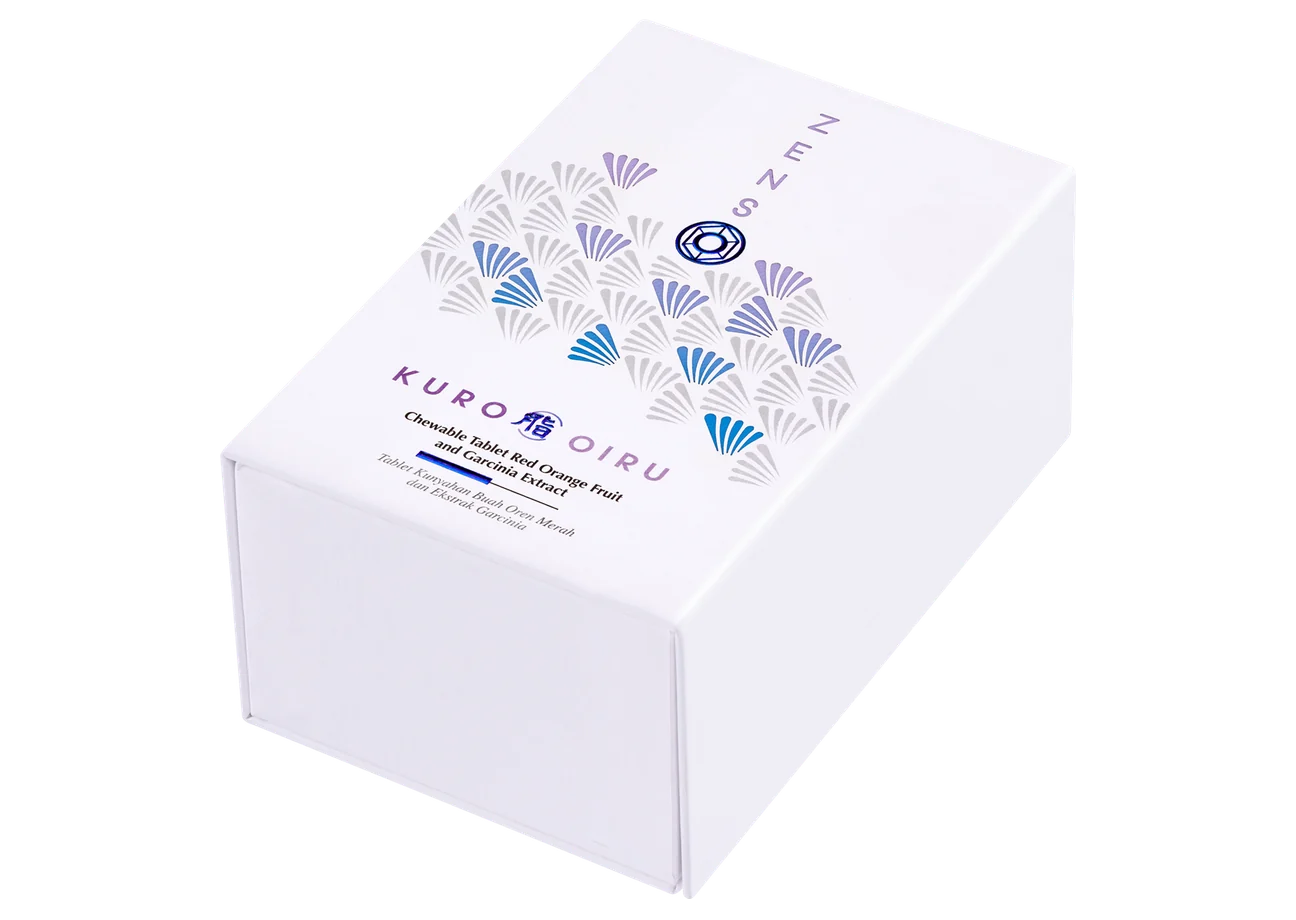
Prescription versions block the enzyme that digests fat; food-type fat blockers usually rely on fibres such as chitosan that bind some fat in the gut, often alongside ingredients said to help the body use fat for energy. They help at the margins of a balanced diet; none cancels out overeating. In Malaysia, ZENSO Kuro Oiru is a food-type fat blocker: a rose-milk chewable taken 30 minutes before lunch and dinner, combining chitosan, L-carnitine, Morosil® red orange, IGOB131® African mango and Kurozu black vinegar. It contains shellfish-derived chitosan, so it is not for anyone with a shellfish allergy.
“Fat blocker” covers very different products, from prescription medicine to chewables sold as food. Here is how each works, what to expect and the side effects to watch for; Kuro Oiru facts come from its product page.
See also: ZENSO Review Malaysia (2026): Lite, Advance, Pro and GLPro compared, plus the four Kuro singles
What is a fat blocker, and how does it work?
Dietary fat has to be broken down by an enzyme called lipase before it can be absorbed. Fat blockers work at one of a few points:
- Lipase inhibitors (medicine). Prescription “fat blocker medicine” such as orlistat stops part of the fat in a meal from being digested, so it passes out of the body. It is a medicine, used under a doctor’s care.
- Fat binders (food-type). Fibres such as chitosan, made from crustacean shells, bind some of the fat in the gut so less is taken in.
- “Fat metabolism” ingredients. L-carnitine, garcinia, tea extracts and fruit extracts are used for their role in how the body handles and stores fat, rather than blocking fat in the meal.
Many supplements, Kuro Oiru included, combine a binder with metabolism ingredients. In Bahasa Malaysia, a fat blocker (penyekat lemak) adalah produk yang membantu mengurangkan penyerapan lemak daripada makanan.
Do fat blockers really work for weight management?
Honestly: modestly, and only with the basics in place. Research on food-type binders and metabolism ingredients is mixed and the effects reported are small. A fat blocker can make an oily lunch less of a setback, but weight still comes down to what you eat over weeks, how active you are and how you sleep. Be wary of anyone promising fast kilo numbers from tablets alone.
Kuro Oiru’s page says it works best with a balanced diet and exercise, and results vary from person to person. It is made for people who love fried food, snack often or rarely exercise.
Carb blocker vs fat blocker: what is the difference?
They target different parts of a meal. A carb blocker works on starch and sugar (rice, noodles, bread, kuih and sweet drinks), usually with ingredients such as white kidney bean and L-arabinose. A fat blocker works on fat (fried food, santan, oily gravies). In the ZENSO range, Kuro Oiru and Kuro Shuga are chewed together before lunch and dinner: Shuga for the carbs and sugar, Oiru for the fat. Mostly rice? Start with a carb blocker. Mostly fried or oily? A fat blocker fits better.
What are Morosil® red orange and African mango?
Morosil® is a branded extract of Moro red oranges, the blood oranges of Sicily. Kuro Oiru’s page says Morosil® red orange extract has been studied in adults for body weight and waistline, alongside a balanced diet and daily walking, and is careful to add that this was a study of the ingredient, not of Kuro Oiru. Two Kuro Oiru tablets give you 400 mg of Morosil® a day.
African mango (Irvingia gabonensis) is a West African fruit tree whose seeds are used in extracts; IGOB131® is a branded African mango seed extract. On Kuro Oiru’s page, Morosil® and IGOB131® together are listed as helping your body store less fat.
The rest of each tablet: chitosan binds fat from the food before your body takes it in; L-carnitine (100 mg a tablet) carries fat to be burned for energy; garcinia (50 mg a tablet) and purple tea support fat metabolism; and 1,000-day fermented Kurozu black vinegar supports your metabolism.
Are fat blockers safe? Side effects (kesan sampingan)
It depends on the type. Prescription lipase inhibitors commonly cause oily, urgent stools after a fatty meal. Fat binders can cause bloating or constipation in some people, and anyone taking regular medicines or fat-soluble vitamins should ask a pharmacist about timing. For any fat blocker:
- Shellfish allergy: chitosan comes from crustacean shells, so avoid chitosan products. Kuro Oiru contains chitosan and is not for anyone allergic to shellfish.
- Pregnant, breastfeeding or on medication: ask your doctor first.
- Check what you are buying: NPRA classified Kuro Oiru as a food product, so it carries no MAL number; SGS screened it for 365 drugs and found none, and found no heavy metals. Listings far below our price may be old, repacked or not genuine.
Kuro Oiru review: how do you take it?
Chew one tablet 30 minutes before lunch and one 30 minutes before dinner. It tastes of rose milk, so no water is needed. A box holds one jar of 60 tablets, which lasts 30 days at two a day, and our price is RM350 a box. Each tablet has 4 kcal and no fat, sweetened with isomalt and sucralose. Kuro Oiru is certified halal by JAKIM, and Halvec Laboratories, a JAKIM panel laboratory, detected no porcine DNA in it.
On timing, the page says everyone is different: oily meals sit lighter from the first week, and the scale starts to move and clothes feel looser over the first box.