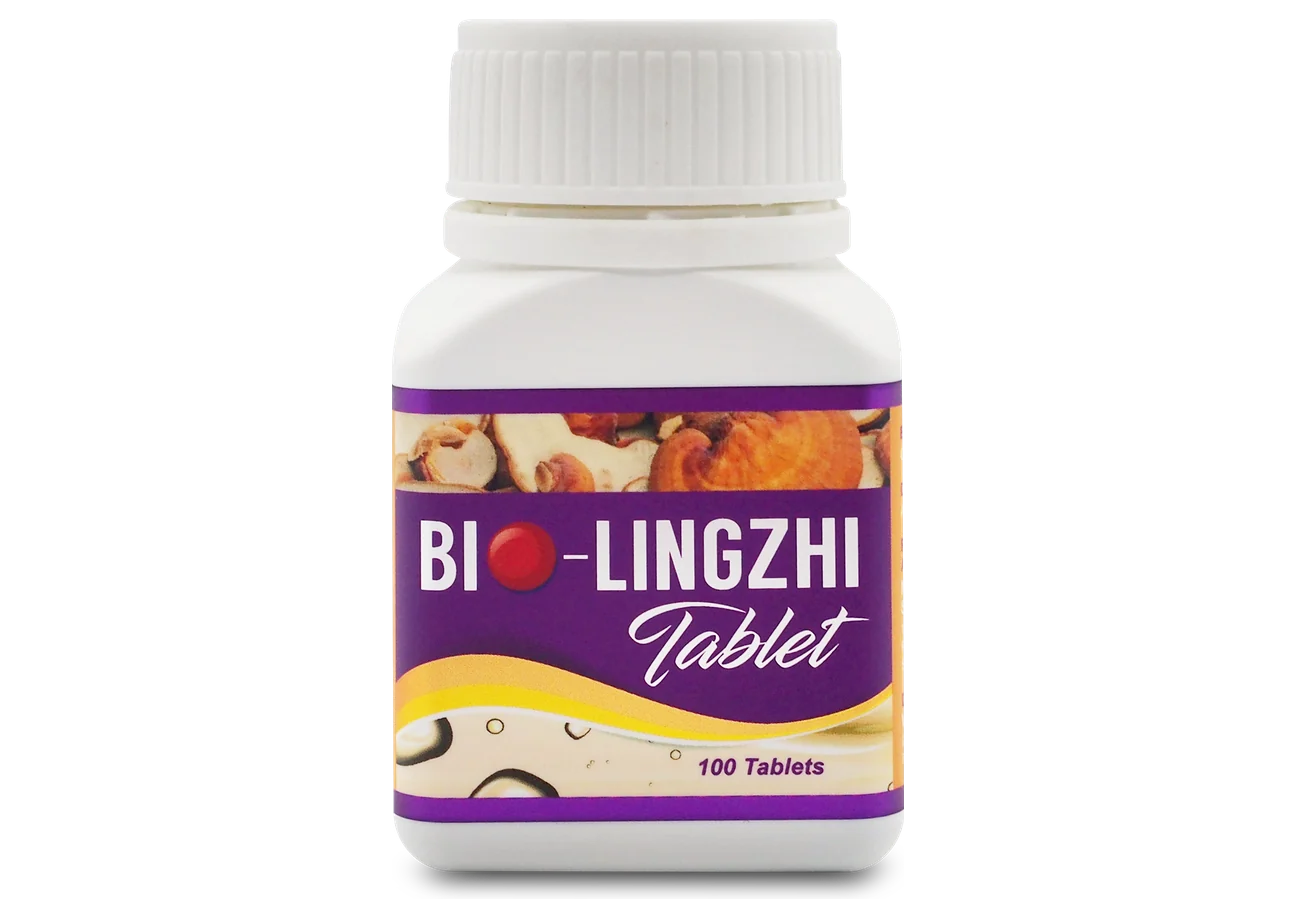
It is a tonic, not a medicine for any disease, and it is not for everyone: ask a doctor first if you take blood thinners or other medicine, have surgery coming up, are pregnant or breastfeeding, or have a liver or kidney condition. For a registered daily tablet, BIO LingZhi gives 250 mg of organic Hokkaido red reishi in every tablet (KKM MAL19987062T).
We sell a lingzhi tablet, so this guide keeps general lingzhi facts apart from what our product page says.
See also: BIO Grape Seed Extract, another BIO Series supplement we stock.
What is lingzhi (reishi, Ganoderma lucidum)?
Lingzhi (灵芝) is the Chinese and reishi the Japanese name for the same glossy, woody mushroom; the species most sold is red reishi, Ganoderma lucidum, so “ganoderma lingzhi” and “reishi mushroom” usually mean the same thing. Asian tradition has long used it as a tonic for vitality and calm. Today it comes as powder, extract, capsules or tablets, almost all cultivated.
What does lingzhi do in the body?
- Polysaccharides, especially beta-glucans: large sugar molecules that interact with the immune system, the main reason lingzhi is taken for immune support.
- Triterpenes (ganoderic acids): the bitter compounds, studied mainly as antioxidants.
Much of the research is laboratory work or small human studies, so think of lingzhi as a daily tonic, not a medicine. Our BIO LingZhi page describes the same roles: beta-glucan polysaccharides help regulate and activate the immune system; triterpenes and polysaccharides help reduce free radicals, so you stay youthful and energetic; and lingzhi has long been taken to calm the mind, so you unwind and rest better.
Can you take lingzhi every day, and when is the best time?
Yes, for most healthy adults. In Chinese tradition it is a neutral tonic, so it will not make you heaty. There is no single best time: take it consistently, at the dose on the label, with water, and after food if your stomach is sensitive. For BIO LingZhi, adults take 1-2 tablets, three times a day, with water: morning, afternoon and night. Take it as directed every day, alongside good food, enough sleep and exercise, and judge it over weeks, not days.
Lingzhi side effects: who should avoid it?
Reported side effects are mostly mild: an upset stomach, a dry mouth, dizziness or an itchy rash. If anything disagrees with you, stop and see a doctor. Ask a doctor before you start if you:
- take blood thinners or have a bleeding problem (lingzhi may add to their effect);
- have surgery coming up;
- take medicine for blood pressure, blood sugar or your immune system;
- are pregnant or breastfeeding;
- have a liver or kidney condition, or a mushroom allergy.
Our page says the same: check with your doctor if you take any medicine, especially blood thinners, if you have surgery coming up, or if you are pregnant or breastfeeding. BIO LingZhi is for adults; keep it out of reach of children.
Is lingzhi safe for the liver and kidneys? What has NPRA reported?
NPRA, the Ministry of Health’s drug regulator, has published updates on kidney-related and liver-related adverse-reaction reports after people took ganoderma (lingzhi, reishi) products. A report records a health problem during use: a reason for caution and a doctor’s review, not proof that lingzhi caused it, nor that it is risk-free.
So with a liver or kidney condition or several long-term medicines, ask your doctor before any lingzhi product, and stop and see a doctor if you notice yellow skin or eyes, dark urine, unusual tiredness or swelling. We never sell lingzhi as a kidney remedy: adverts that talk of foamy urine or dialysis describe reasons to see a doctor, not to buy a supplement.
Mushroom, extract or spores: what is the difference?
- Raw slices: boiled for hours; you judge the amount.
- Whole-mushroom powder: fruit body and/or mycelium (the root-like threads), ground and pressed into tablets or capsules.
- Extract: concentrated, often labelled with a polysaccharide percentage.
- Spore powder and spore oil: from the tiny spores the cap releases; the powder is usually sold “broken-wall”.
None is simply “best”; compare the species, the part used and the amount per serving. BIO LingZhi uses the fruit body and the mycelium of red reishi (Ganoderma lucidum), 250 mg in every tablet, not the spores. On our page, the fruit body brings triterpenoids and immune proteins, and the mycelium brings polysaccharides and vitamins that help regulate the immune system.
How to choose a lingzhi supplement in Malaysia
- A MAL number you can search on NPRA’s official product search (ending in “T” means a registered traditional product), next to the KKM hologram, under an unbroken seal.
- The species and the amount per tablet, not just “lingzhi”.
- Origin and heavy-metal test papers, because mushrooms take up what they grow on.
From our page: BIO LingZhi is KKM registered (MAL19987062T) and made in Malaysia, by MOH Pharmaceutical Technologies Sdn. Bhd., Shah Alam, in a GMP-certified plant. Each 348.5 mg tablet contains 250 mg of Ganoderma lucidum (red reishi). The red reishi powder carries a certificate of analysis from Hokkaido Reishi Co., Ltd., and its growing site in Bibai, Hokkaido is certified organic in Japan. Arsenic, cadmium, lead and mercury were not detected (Bio Synergy Laboratories). The page says BIO LingZhi uses the whole mushroom to strengthen your immune defence, support healthy liver function and help you age well; with a liver condition, ask your doctor first. Our price is RM209 for one bottle of 100 tablets, with free delivery across Malaysia, Sabah and Sarawak included.