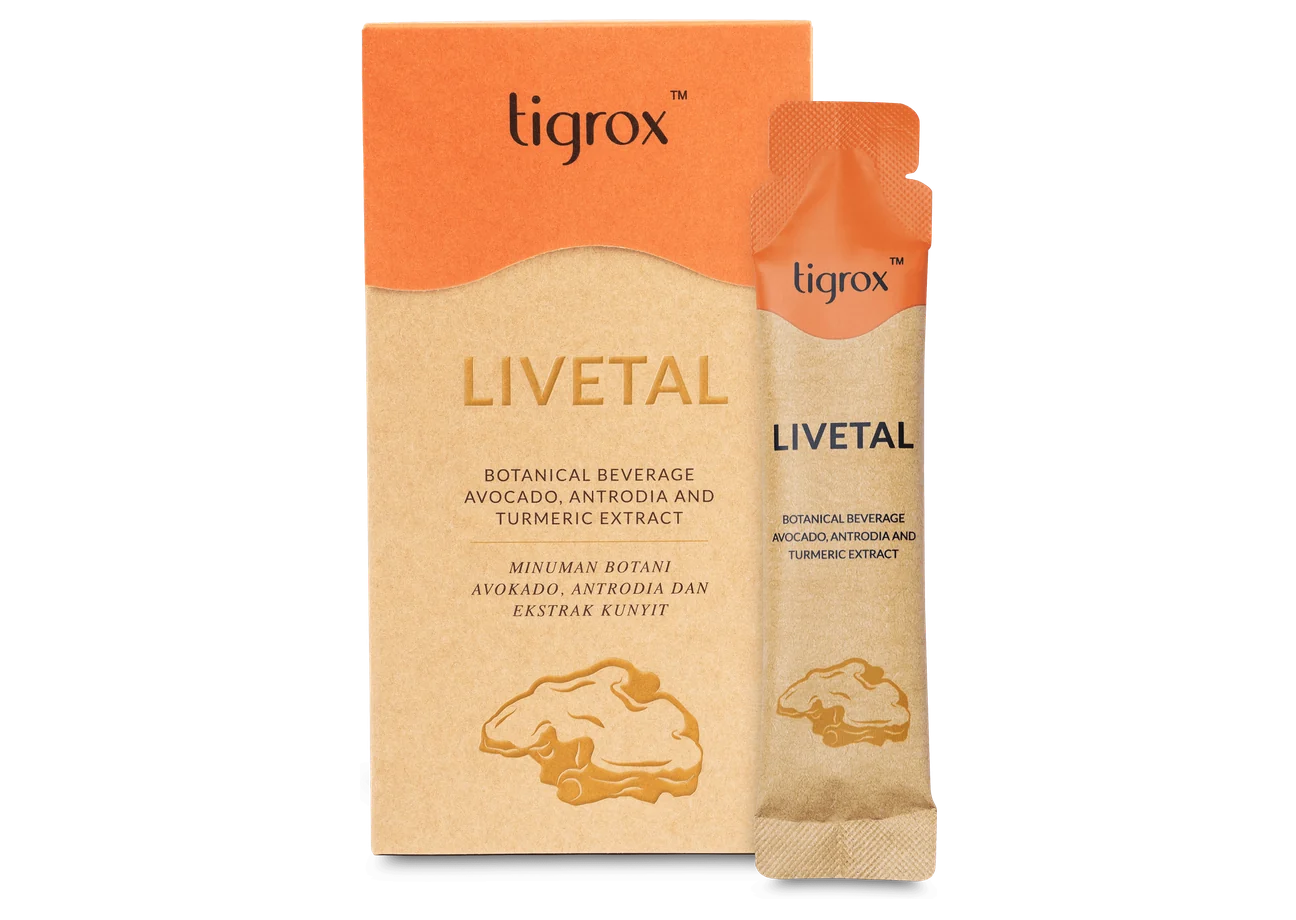
It is prized in Taiwanese tradition and studied for its triterpenoids and polysaccharides, but most research so far is laboratory and animal work, so think of it as a daily wellness ingredient, not a medicine. Because wild antrodia is scarce, products use cultured mycelium or cultivated fruiting bodies. In Malaysia you can take it as TIGROX LIVETAL, a once-a-day drink built on Antromax® antrodia mycelium from Taiwan with turmeric, bupleurum and astragalus: see TIGROX LIVETAL on our Malaysia store.
This guide explains what the mushroom is, what is and is not known, how products differ and who should be careful. We sell an antrodia drink, so when we describe it we quote our own product page; the general science stays general.
See also: TIGROX HOMEGA fish oil, LIVETAL’s once-a-day TIGROX partner
What is Antrodia cinnamomea?
Antrodia cinnamomea is a mushroom found only in Taiwan. In Chinese it is 牛樟芝 (niu zhang zhi) or 樟芝, after the stout camphor tree (牛樟, Cinnamomum kanehirae) it lives on. Older papers and labels use Antrodia camphorata, and you may also see Taiwanofungus camphoratus. Both refer to the same species.

In the wild it grows only inside the stout camphor tree, 450 to 2,000 m up in Taiwan’s mountains. The tree is rare and protected and the mushroom grows slowly, so almost every product you can buy uses a cultivated form.
What are antrodia’s traditional uses, and what does research suggest?
In Taiwan antrodia has a long folk reputation as a treasured tonic, especially around drinking and tiredness. Modern interest comes from its chemistry: the LIVETAL flyer notes 400+ papers in international journals, and up to 200 triterpenoids found in it. Those triterpenoids, with its polysaccharides, are what researchers study most.
The honest summary: most of that research is in cells and animals, human trials are few and small, and none of it makes antrodia a medicine. Our own page labels those points as being about the Antromax® ingredient, not studies of LIVETAL. In product terms, our page describes LIVETAL’s benefits like this:
- Liver: Antromax® antrodia, turmeric and bupleurum support the liver’s daily work and help protect liver health.
- After drinking: antrodia supports your body’s alcohol breakdown and helps you recover from a hangover, though it does not make heavy drinking safe.
- Antioxidant: triterpenoids, polysaccharides and SOD from antrodia, plus astragalus, bring antioxidant support.
- Immune: antrodia and astragalus help modulate and strengthen your immune defence.
- Energy: it helps ease tiredness and restore your energy when late nights and deadlines pile up.
Mycelium vs fruiting body: what is the difference?
The fruiting body is the visible mushroom; the mycelium is the thread-like network it grows from. Antrodia comes in three forms: wild fruiting bodies (rare, costly and hard to verify), fruiting bodies cultivated on camphor wood or in dishes, and mycelium grown by fermentation or on grain. Each has a different mix of compounds; what matters is how it was grown, how much is in a serving and whether it is tested.
The antrodia in LIVETAL is Antromax®: Antrodia cinnamomea mycelium, cultured on whole grains for 3 to 5 months. The LIVETAL flyer says Antromax® has more triterpenoids than 3-year-old wild antrodia, that it is patented in the US (9,458,421 B2), Taiwan, Germany, Japan and China, and that it won gold at INPEX, Pittsburgh. These are statements about the ingredient, not trials of the drink.
What does “antrodia 450 mg” mean, and how is it taken?
“450 mg” is a per-capsule amount you will see on some antrodia capsule labels. It tells you the weight of antrodia material in a capsule, not its strength: 450 mg of plain mycelium powder and 450 mg of a concentrated extract are very different things. There is no established standard dose, so follow the label of the product you buy.
LIVETAL is a drink, not a capsule, and our page lists its ingredients without milligram amounts, so we will not quote one. You take one 20 ml sachet once a day, after a meal, straight from the sachet with no water or mixing; the box allows 1-2 sachets a day. We suggest at least 60 days (3 boxes) before you judge it, alongside good food, enough sleep and plenty of water. Results vary from person to person.
Does antrodia have side effects? Is it halal?
There is not enough good human data to list antrodia’s side effects with confidence. That is a reason for care, not proof that there are none. Ask your doctor first if you are pregnant, breastfeeding or taking any medicine, and also if you have a liver or immune condition or surgery planned.
Antrodia is a fungus, so halal status depends on how the whole product is made and certified, not on the mushroom alone. LIVETAL is named on a JAKIM Halal certificate (MS 1500:2019), valid until 31 August 2027, and Halvec Laboratories, a JAKIM panel laboratory, found no porcine DNA in it. The National Poison Centre at Universiti Sains Malaysia also screened LIVETAL for 8 corticosteroids by GC-MS and found none.
Antrodia vs milk thistle: how do they compare for liver support?
They are different kinds of thing. Milk thistle is a plant (Silybum marianum) whose seed extract, silymarin, is the classic liver herb in Western supplements. Antrodia is a Taiwanese mushroom valued for its triterpenoids and polysaccharides. Both have long traditional use for the liver, and for both the evidence in people is limited or mixed, so neither is a liver medicine.
LIVETAL does not contain milk thistle; it pairs antrodia with turmeric, bupleurum and astragalus in a fruity sachet with 6 kcal and 0.4 g of sugar.