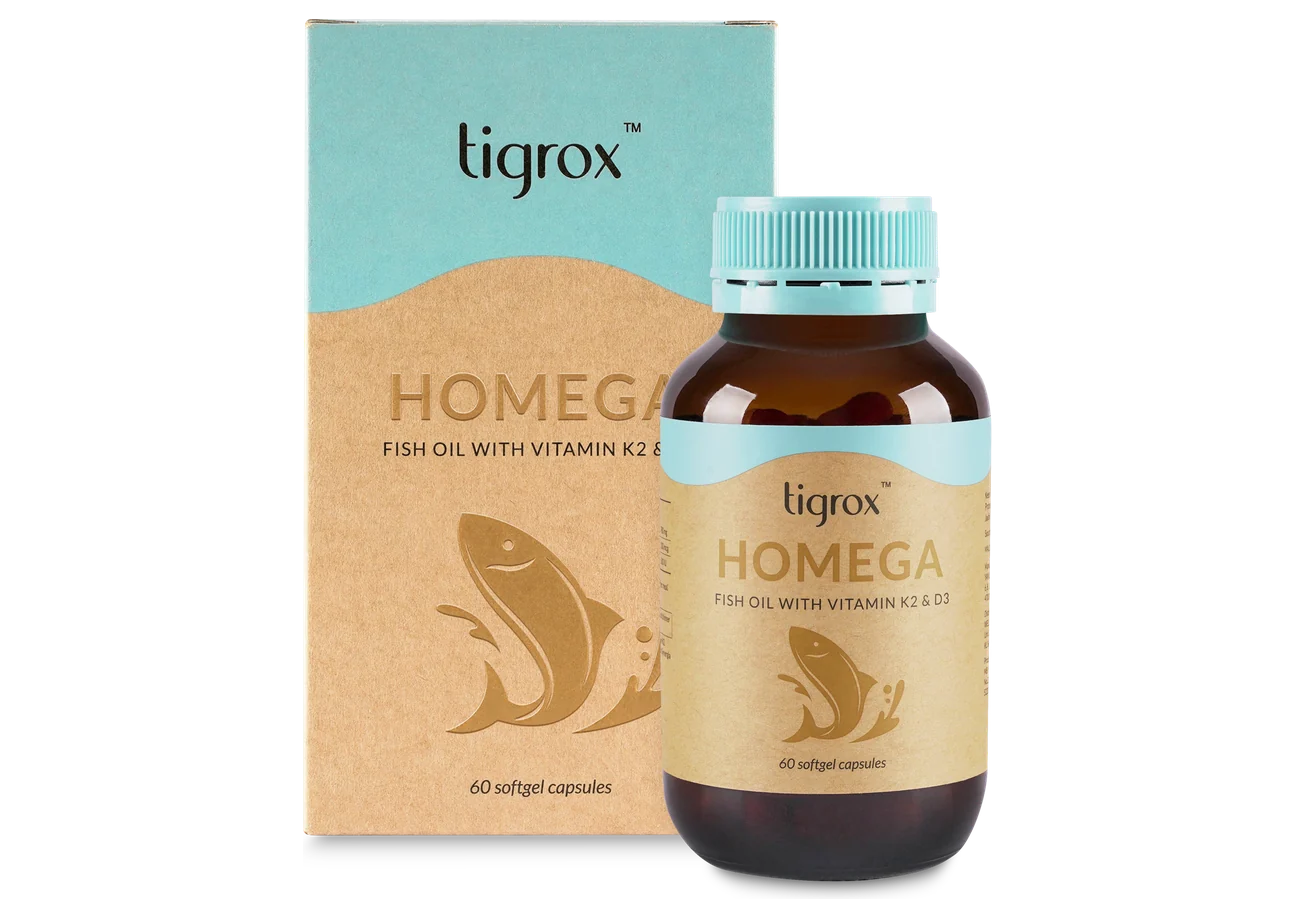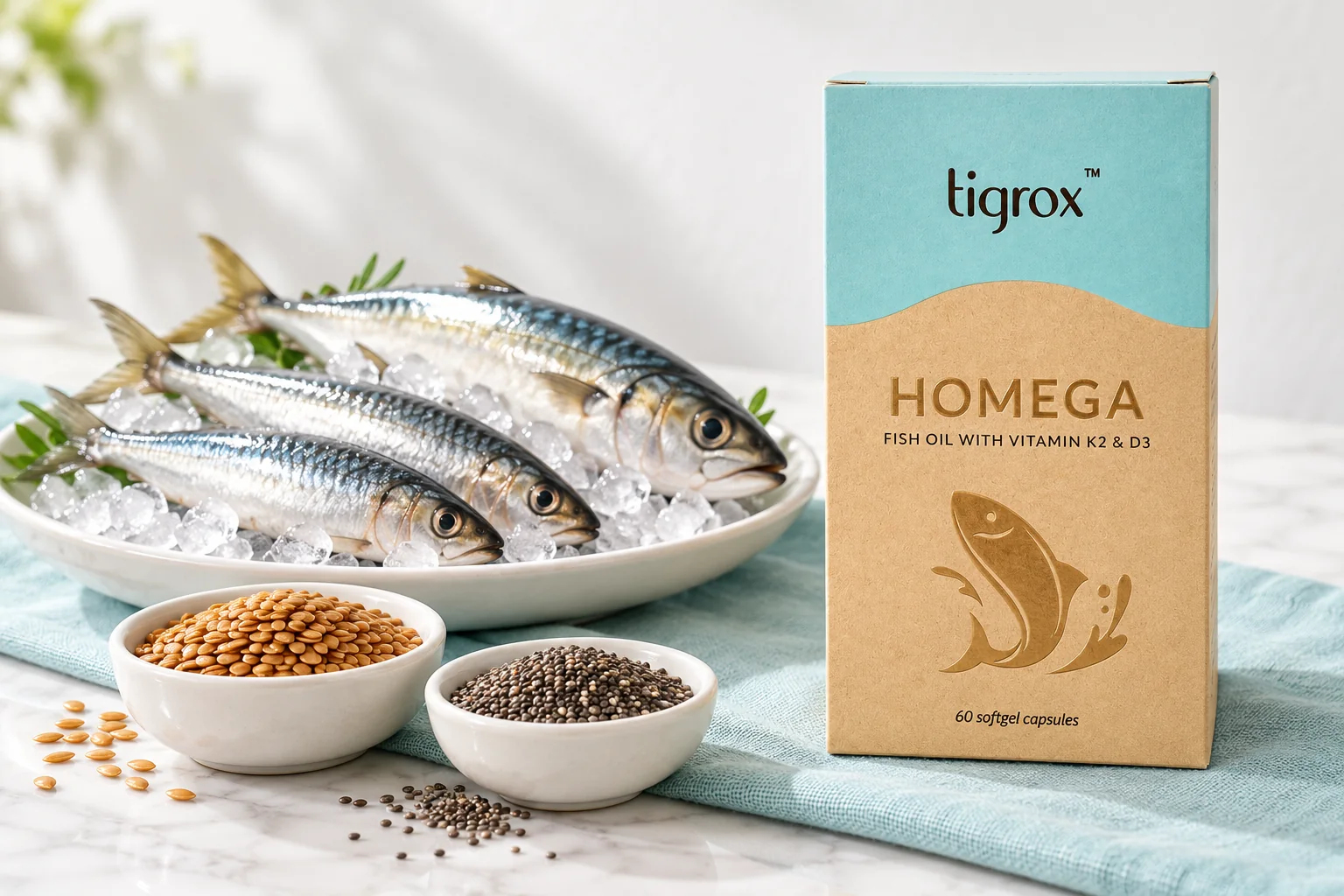
Adults take it mainly to support the heart and circulation, healthy triglyceride and cholesterol levels, and brain and eye function; it is a supplement, not a medicine. Compare EPA and DHA per softgel (not the oil total), the KKM number and purity tests; on blood thinners, ask a doctor first. One option is TIGROX HOMEGA on our Malaysia store: 312 mg of EPA and 156 mg of DHA from 780 mg of Omegavie™ deep-sea fish oil, plus vitamins K2 and D3, in one softgel a day.
We sell one fish oil, so this guide answers the general questions first and then shows where our product fits, with no study figures, ratings or customer quotes.
See also: TIGROX LIVETAL, the one-sachet-a-day TIGROX partner drink for HOMEGA
What is a fish oil supplement good for?
Its value lies in two omega-3 fats, EPA and DHA, found in every cell membrane; DHA is concentrated in the brain and retina. Oily fish such as sardines and ikan kembung are the main source, so people who rarely eat fish often use a supplement for three things:
- Heart and circulation: supporting heart health and healthy blood flow.
- Blood fats: it is most often taken to help maintain healthy triglyceride levels.
- Brain and eyes: DHA is a main building block of both.
Fish oil is not a medicine: if your triglycerides or cholesterol are high, or you have a heart condition, your doctor decides what you need. Our HOMEGA page says “Omega-3 helps maintain healthy cholesterol and triglyceride levels” and that DHA “supports eye comfort”.
Fish oil or omega-3: what is the difference?
Omega-3 is a family of fats; fish oil is one source. Plant omega-3 (ALA, in flaxseed and chia) is converted only a little into EPA and DHA, the forms found in fish and algae oil. And the number on the front of a bottle can mislead: a “1000 mg fish oil” softgel holds 1000 mg of oil, and only part of it is EPA and DHA. Compare the EPA and DHA figures instead. Each HOMEGA softgel holds 780 mg of Omegavie™ fish oil, giving 312 mg of EPA and 156 mg of DHA.

Is it okay to take fish oil every day, and how much?
Yes, for most healthy adults it is a daily supplement: omega-3 builds up over weeks, so consistency matters more than the hour. Follow the label dose (more is not better; higher amounts only on a doctor’s advice) and take it with a meal, which helps absorption and avoids fishy burps. Morning or night, pick the meal you never skip.
HOMEGA’s dose, printed on the box, is one softgel a day after a meal, so a bottle of 60 softgels lasts 60 days. Because red blood cells renew about every 120 days, our page suggests one softgel every day for at least 180 days (3 bottles), with good food and regular exercise. Results vary from person to person.
Side effects: who should not take fish oil?
The common side effects are mild: fishy burps, an upset stomach, nausea or loose stools, mostly when it is taken without food or in large amounts. Ask a doctor before you start if you:
- take blood thinners such as warfarin, because omega-3 may add to their effect on bleeding (mention it before surgery too);
- are pregnant or breastfeeding, or want to give it to a child;
- take any regular medicine or have a long-term medical condition;
- are allergic to fish or seafood.
HOMEGA’s box asks you to consult a healthcare practitioner first if you take anticoagulant or blood-thinner products, and our page gives the same advice for pregnancy, breastfeeding and any medicine. The softgel is bovine, so it is not for vegetarians. Our page lists no specific side effects, and we will not claim that any supplement has none.
How do I choose a fish oil in Malaysia, and is it halal?
- EPA and DHA in the daily dose, not just the oil total.
- A KKM MAL number on the box, which you can look up on the NPRA website.
- Purity: independent heavy-metal tests, not just the word “pure”.
- Freshness: omega-3 oxidises easily; good makers say how the oil is protected.
- Halal: the shell matters more than the oil, as gelatin can come from pork, beef or fish. Look for a recognised Halal logo and the shell source.
- Sealed, in-date stock: check the seal and expiry date, wherever you buy.
How HOMEGA answers, from our product page: KKM registered (MAL19096038NC, printed on every box); SGS Malaysia found no mercury, arsenic, lead, cadmium, antimony or tin; the oil is molecularly distilled and protected by QualitySilver™ antioxidants (TOTOX below 26), and the raw material is IFOS 5-star certified. Halvec Laboratories found no porcine DNA in HOMEGA, and the shell is bovine. Our page shows no Halal certificate, so if you need one, check the box or ask our advisor on Messenger. Every box has a QR authenticity sticker.
Why do some fish oils add vitamin K2 and D3?
Both vitamins dissolve in fat, so fish oil carries them well: D3 helps the body absorb calcium from food, and K2 helps send it to the bones. HOMEGA adds 100 mcg of MenaquinGold™ vitamin K2 and 500 IU of vitamin D3; our page says K2 “helps direct calcium to your bones and helps preserve elastin, keeping blood vessels flexible”. Vitamin K can change how warfarin works, so anyone on blood thinners must ask their doctor first.