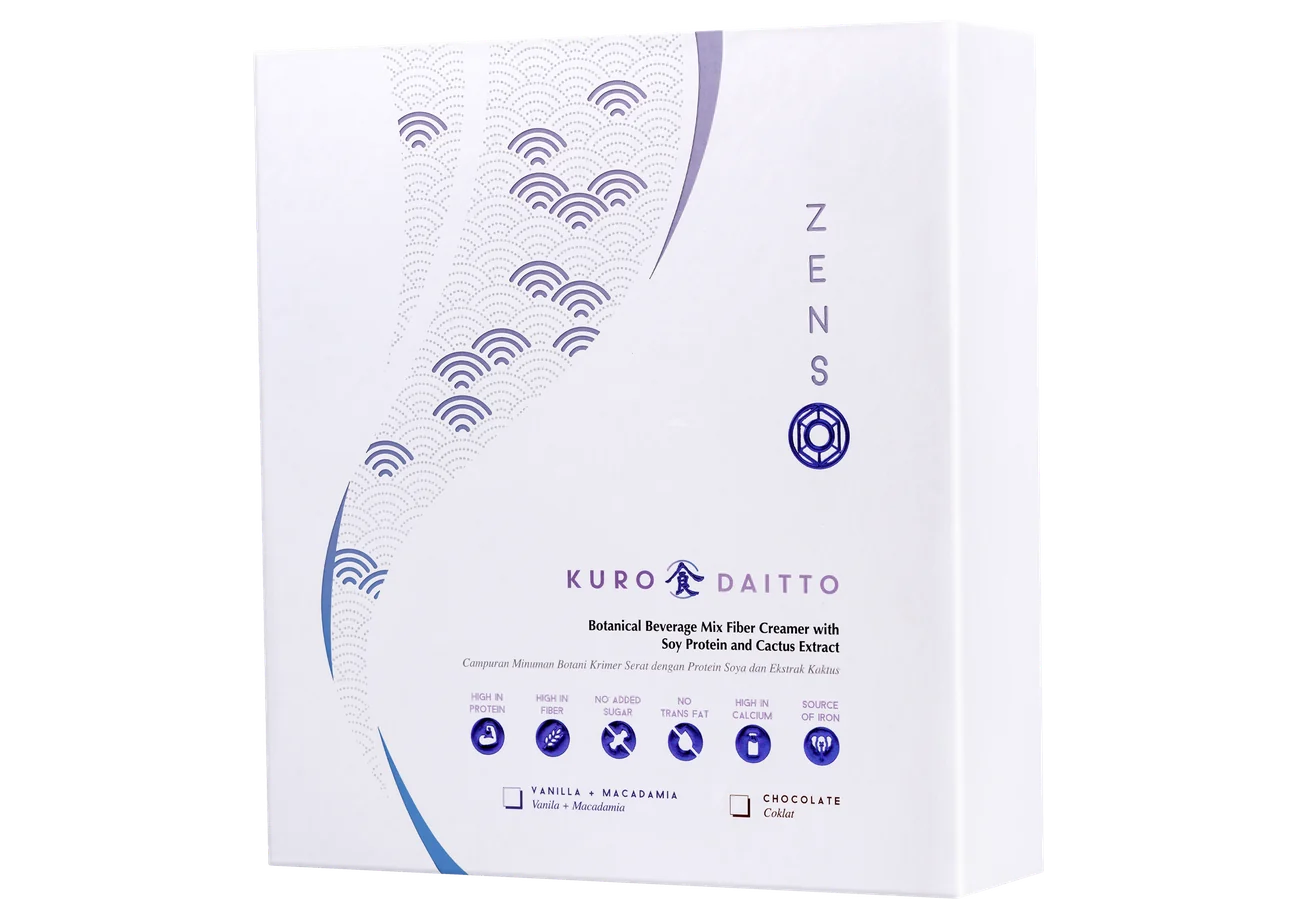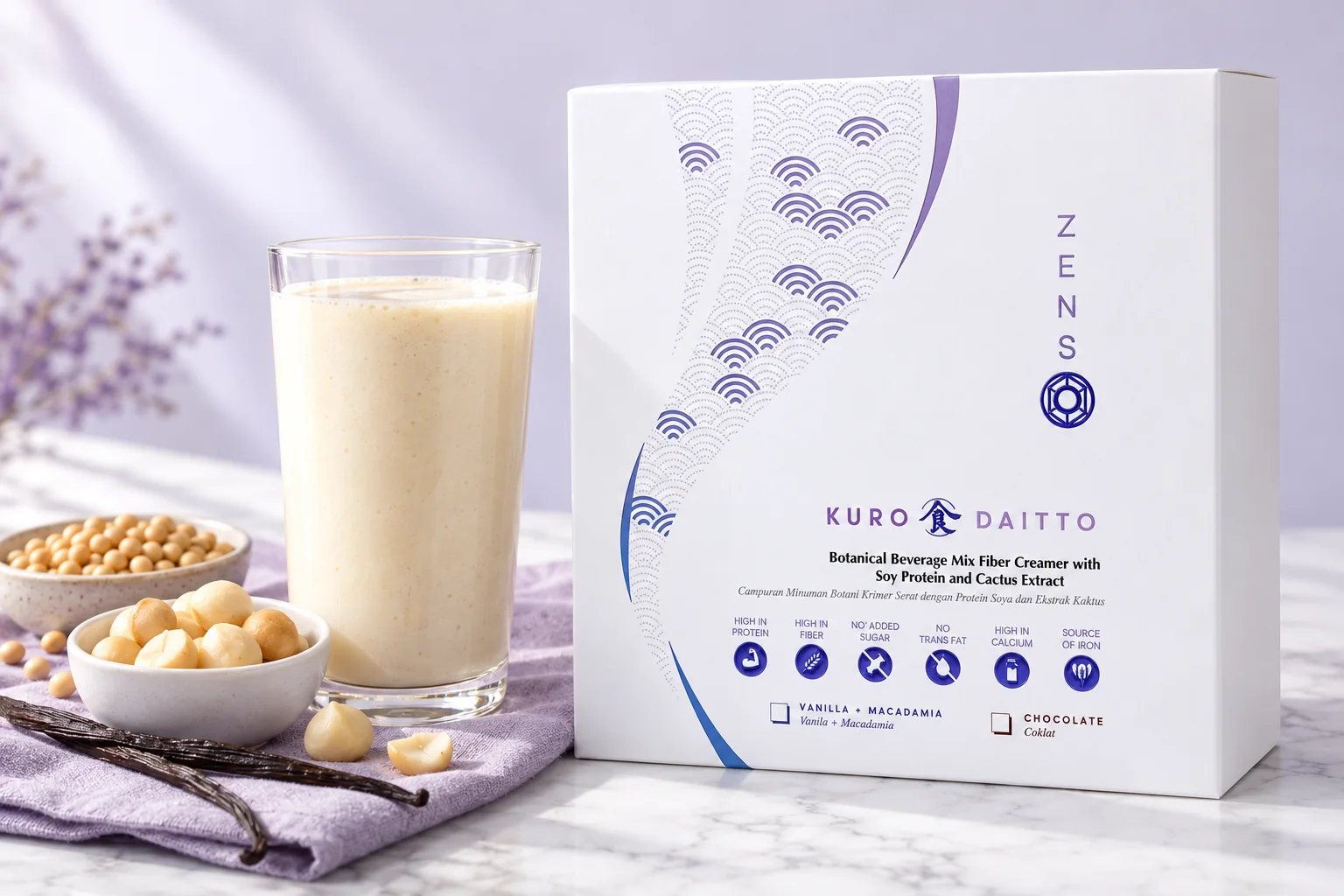
It helps with weight loss when it replaces a bigger meal and your daily calories go down, usually one or two meals a day alongside balanced real food; it does not burn fat on its own, and weight-loss shakes are not for pregnancy. For a kurozu-based option, ZENSO Kuro Daitto gives about 130 kcal, around 10 g of protein, fibre and 18 vitamins and minerals per sachet with 200 ml of water: see ZENSO Kuro Daitto on our Malaysia store.
We sell one meal replacement, so we answer the general questions first and then show where our shake fits. No star ratings, customer quotes or kilo promises here.
See also: ZENSO Review Malaysia (2026): Lite, Advance, Pro and GLPro compared, plus the four Kuro singles
What is a meal replacement shake, and how is it different from a protein shake?
A meal replacement shake is built as a complete, portion-controlled meal: protein, some carbohydrate and fat, fibre, and a spread of vitamins and minerals, as a powder or a ready-to-drink bottle. A protein shake is mostly protein, made to top up intake around exercise. If a label lists protein grams and little else, it is a protein shake, not a meal.
Can you lose weight with meal replacement shakes?
Many people can: a measured shake makes it easy to eat fewer calories than the meal it replaces, without counting anything. The shake is a portion-control tool; the weight stays off only if your other meals and habits change too.
Meal replacement or simply eating less? Both work through fewer calories. A shake helps most if your problem is a skipped breakfast, big hawker portions or a 4pm kuih habit, because it gives you a fixed, filling meal. If you already eat smaller, balanced meals, you may not need one.
How many meals a day can you replace, and for how long?
Most people replace one meal a day, often breakfast; some replace two. Keep at least one proper meal a day with vegetables, protein and whole grains, and do not live on shakes alone. Replace most meals or go very low-calorie only with a doctor or dietitian. There is no fixed end date: many people use one shake a day for some weeks or months while building better habits, then keep shakes for busy days.
What should a good meal replacement contain?
Read the nutrition panel per serving:
- Calories: enough to count as a meal, fewer than the meal it replaces. Check whether the figure assumes water or milk.
- Protein: keeps you full and helps you keep muscle while you eat less.
- Fibre: adds fullness and supports regular bowel movements.
- Vitamins and minerals: a full list, not just protein.
- Sugar: “no added sugar” is worth looking for.
- Allergens: milk and soy are common.
Vegan or plant-based? A plant shake does the same job if it gives similar protein; soy is a complete protein, and pea-and-rice blends are common.
Powder or ready-to-drink? Powder usually costs less per meal and travels well; bottles win on convenience. The label matters more than the format.
The best meal replacement shakes in Malaysia: what to look for
We will not rank brands, because we sell one. Use this checklist instead:
- The right classification. A meal replacement is a food, so it normally has no MAL number; MAL numbers are for medicines and supplements. Look for published lab reports instead, such as drug screening.
- Halal, flavour by flavour. Check which flavours the JAKIM certificate names; it is not always all of them.
- Sealed stock and a believable price. Prices far below the usual can mean old or repacked stock.
- A taste you will drink every morning.
Which label claims should make you cautious?
- A promise of a set number of kilos in a set number of days. Everyone’s results differ.
- “No diet, no exercise needed.”
- Medical-sounding promises. A meal replacement is a food, not a cure for anything.
Are meal replacement drinks safe in pregnancy, and who should ask a doctor?
Weight-loss shakes are not for pregnancy: it is not the time to cut calories, and your nutrition should be planned with your doctor, as it should while breastfeeding. Ask your doctor first, too, if you take any medicine (our Kuro Daitto page says so) or have a long-term health condition.
Where does a kurozu-based shake like ZENSO Kuro Daitto fit?
Kuro Daitto is the meal-replacement step of the ZENSO Kuro routine: one 30 g sachet shaken with 200 ml of water gives about 130 kcal, around 10 g of soy and whey protein, fibre from FiberCreme™ and konjac, and 18 vitamins and minerals, with no added sugar in any flavour. Our page says its Slimaluma® cactus extract helps curb your appetite and its 1,000-day Kurozu black vinegar from Kagoshima supports your metabolism.
You drink it at breakfast in place of the meal; one box of 30 sachets lasts 30 days at one a day, or 15 days if you replace two meals. Chocolate and Vanilla Macadamia are certified halal by JAKIM; Coffee is not on that certificate and has about 120 mg of caffeine a sachet. It contains milk and soy, so it is neither vegan nor lactose-free. NPRA classified it as a food, and SGS screened it for 365 drugs: none were found. Our price is RM360 a box, with free delivery. Results vary from person to person; it works best with a balanced diet and exercise.